
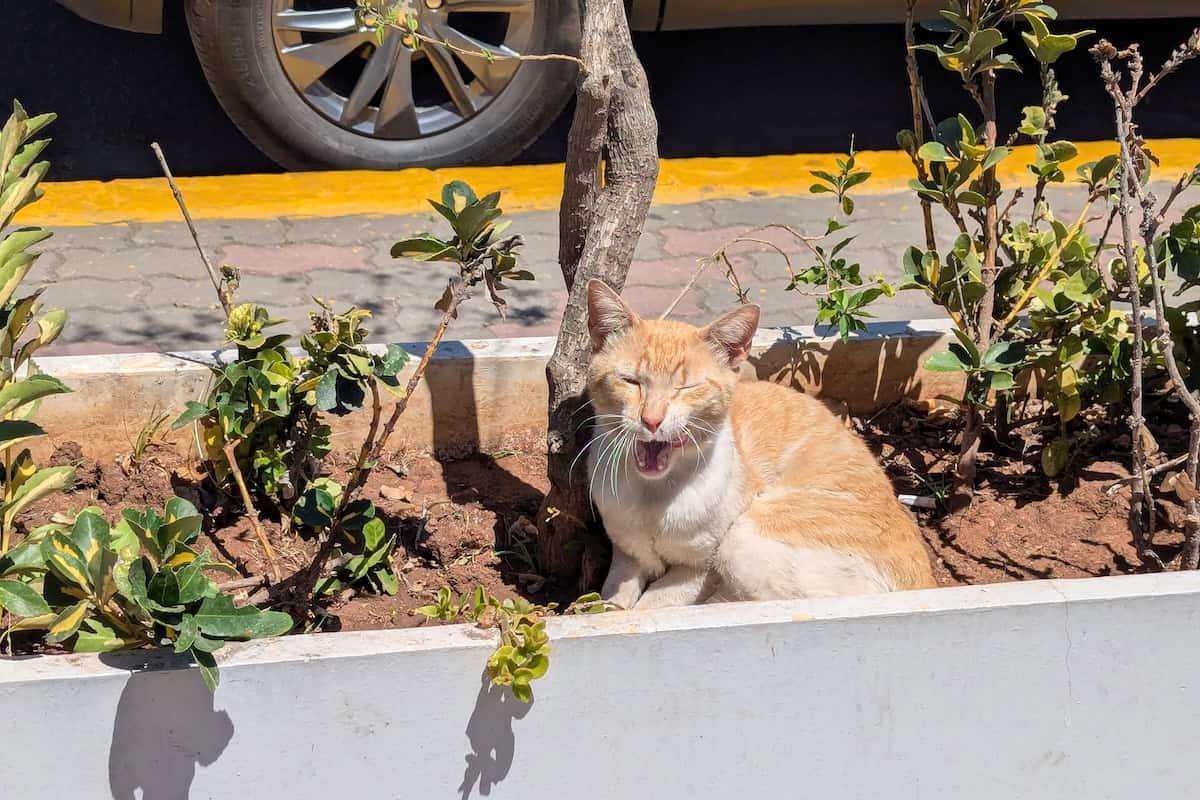
The Cats of Casablanca
Skip to Section
On a recent Atlantic crossing, our cruise ship docked in Casablanca, Morocco, for the day. This busy industrial city of 3 million people is overwhelming, and traffic is heavy, so we chose an excursion that helped us prioritize what we like best: cultural sites, such as museums and religious landmarks.
We arrived in the Port of Casablanca, one of the largest artificial ports in the world and a major entry point for ships and cargo, early in the morning, and headed out for our tour by 8 a.m. Our itinerary included a visit to the Hassan II Mosque and the Abderrahman Slaoui Museum, followed by a brisk walk through the market area in the old town.


Our tour guide, an elderly man with limited vision, was a former student and later a teacher at the mosque. Well known throughout the city, he was warmly greeted everywhere we went. These greetings caused a short delay, but it was certainly impressive to see many people, from stern security guards at official buildings and gates to passersby on the street, embrace him.
His inside knowledge and extended visit added to the landmark’s reverence. One of the largest mosques in the world, it was built by Moroccan artisans from across the kingdom. The mosque’s 60-story minaret features a laser that points towards Mecca, which we viewed as our ship left port that evening. Designed under King Hassan II’s guidance, it is an impressive addition to the city.

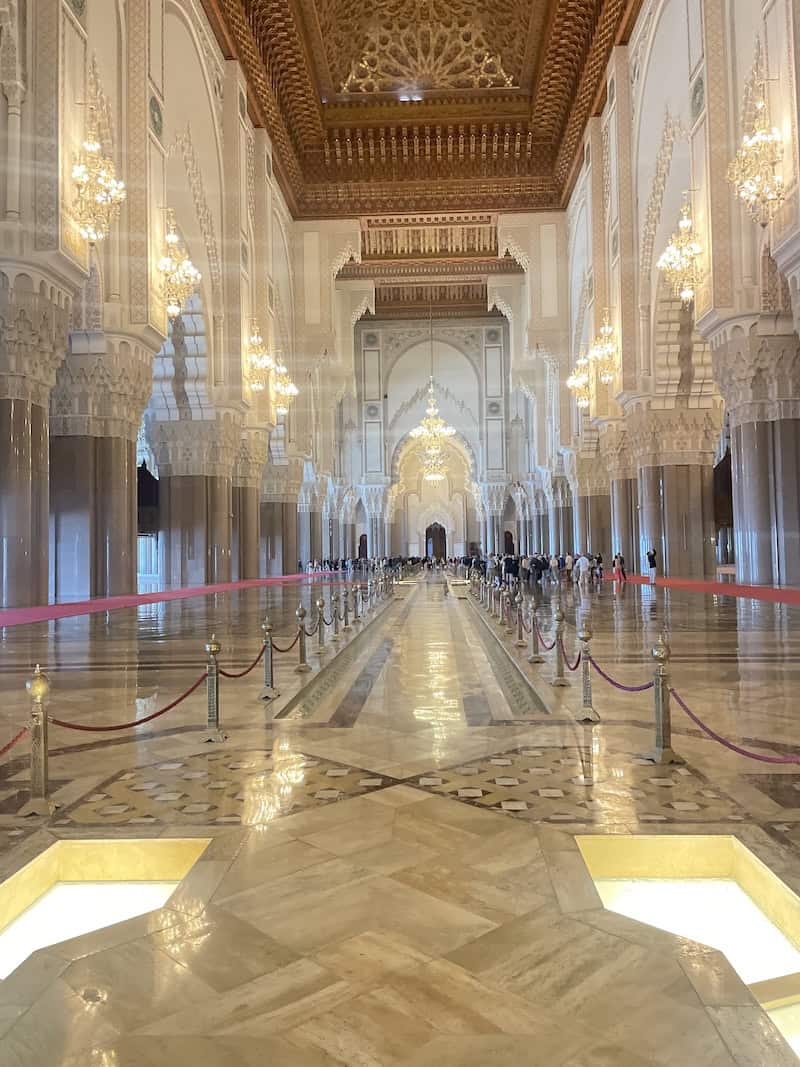
And speaking of kings, do you know the phrase, “a cat may look on a king…”? It means that even a person of low status or importance has rights. This is especially true in a mosque, where all people are considered equal before God, regardless of wealth, race, or social status. People are separated by gender, but worshippers stand shoulder-to-shoulder and foot-to-foot during prayer, breaking down societal barriers.
After visiting the massive and pristine Hassan II Mosque, we scooted over to the Abderrahman Slaoui Museum for a 20-minute gander at the largest collection of Orientalist posters in Morocco. The museum also features Moroccan jewelry, crystal objects, historic paintings, and hosts contemporary Moroccan artists with works ranging from photography to sculpture and mixed media. All the labels, however, are in Arabic and French, so it was difficult for us English-speaking visitors to understand without having time to use our mobile phone app translator.


As we exited the museum, we were greeted by a black-and-white Tuxedo cat sitting atop a car. Finally! Something we all understood. The tour encircled the car and took photos, pointing their phones at the bored feline.
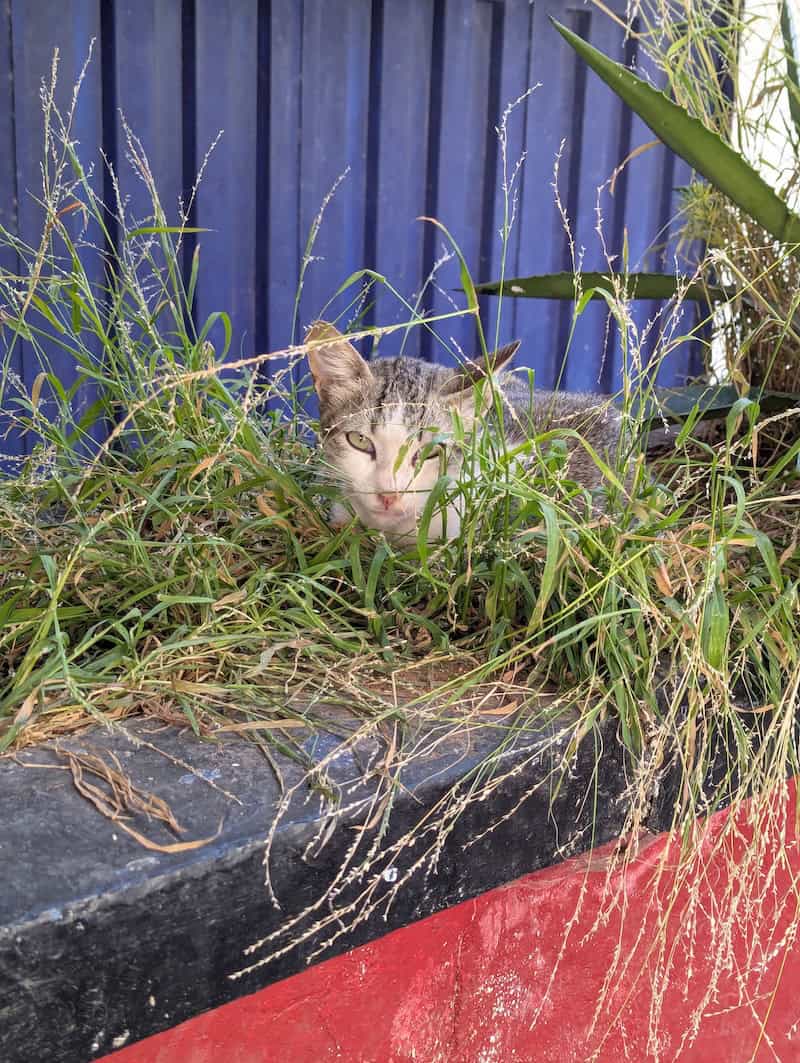
While a city’s values are often seen in its monuments and museums, a community’s values show in its small acts of kindness. In Casablanca, it’s easy to miss a cat sleeping in the shadows. But once you start noticing them, you also spot empty food tins, bowls of water, cardboard boxes, and even small shelters. The residents of Casablanca look after these little city ambassadors and show them kindness every day.
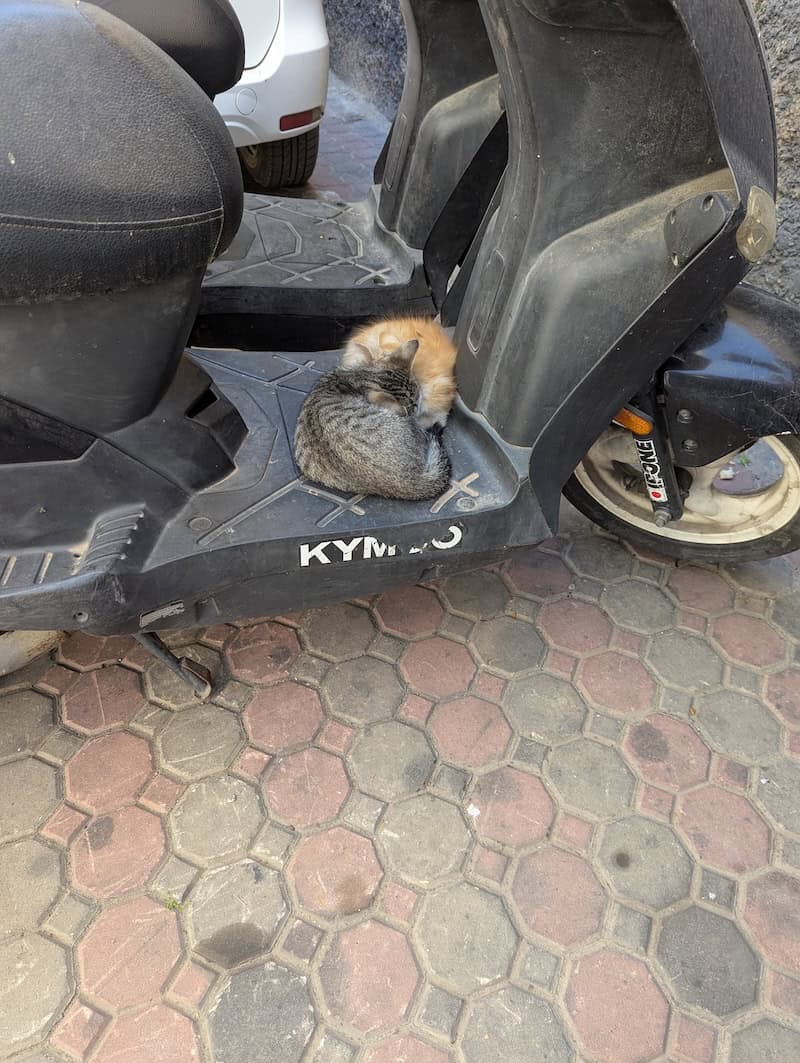
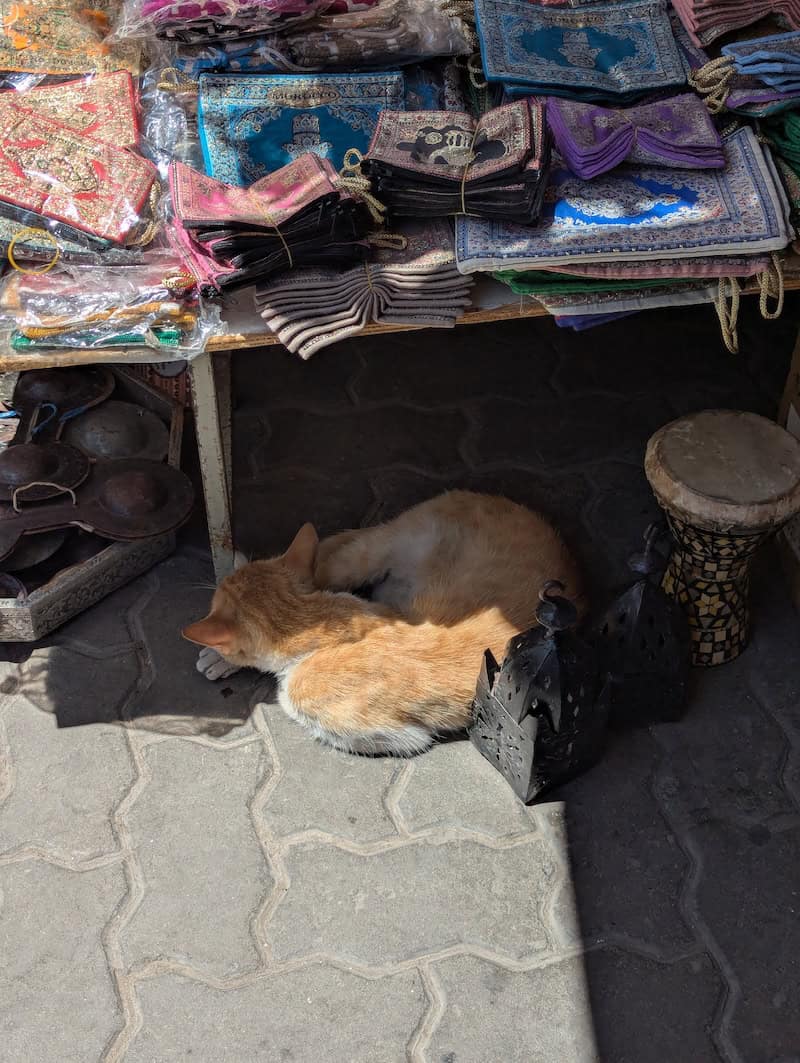
Cats lounge across scooter seats, peer out from the cool shadows of shopfronts, and nap in the leafy shade of flower boxes. Some perch beside merchants, whiskered accountants keeping watch over the day’s business. Cats are small, quiet, and seen as harmless, so they can live near markets and cafés without disturbing daily life.

Visitors often find the cats’ relaxed attitudes charming as they move confidently through public spaces. Many travelers come from places where stray animals are hidden or impounded. In Casablanca, cats are not seen as strays.
These cats belong to the community rather than to any one person. No one really owns them, but they are not alone. A restaurant owner might leave out scraps, a merchant might allow a litter to stay behind a stall, and a family might refill a water dish or open a can of tuna.
This relationship goes back a long way. In many Muslim communities, cats are respected in daily life. Islamic tradition views cats as clean animals that can move freely among people, and stories about their kindness or cruelty are taken seriously.
We shouldn’t idealize their lives. Street cats face many hardships—illness, injury, and malnutrition. The gap between affection and systematic care highlights that true compassion is strongest when supported by community-driven solutions.
A bowl of water in an alley, a scrap of fish, or a cardboard box may seem small. But when many people do these things, they create a safety net for the cats. Feeding helps a cat survive today. Sterilization prevents future suffering. Vaccination protects both animals and people.
The best future for Casablanca’s cats centers on community efforts that foster healthier, safer lives for the cats already living in neighborhoods, emphasizing collective responsibility rather than removal.
So where are all the dogs?
Dogs are present, but their role differs from that of cats. Islamic tradition assigns dogs a more complex role and discourages keeping them as casual indoor pets. While cats are widely accepted as city companions, dogs are mainly seen as guardians, herders, or members of rural street packs.
We saw only one dog in Casablanca: a working German Shepherd on a short leash next to a security guard.
While Moroccans don’t dislike dogs, they face more fear, caution, and public health concerns—especially due to rabies risks and bite incidents. The country has expanded Trap-Neuter-Vaccinate-Return programs for dogs, showing a shift toward humane management.


About the Authors
Robin Van Auken, MA, RPA, is the CEO of Hands-on Heritage. She is an anthropologist and registered professional archaeologist (National 15069). She specializes in working with communities, galvanizing individuals to contribute their memories, photographs, and artifacts to develop legacy projects. Through in-depth, sensitive interviews, she learns the important stories that connect people through time and space. Robin especially enjoys the challenge of hunting for historic photographs and artifacts that highlight America’s history. As a professional archaeologist, she has directed multi-year public cultural heritage projects, working with hundreds of volunteers and educating thousands of visitors.
Lance Van Auken retired in 2020 from Little League Baseball and Softball in Williamsport, PA, where he served as Vice President. While at Little League, he was liaison to The White House during President George W. Bush’s Tee Ball on the South Lawn initiative. As spokesman for Little League, he has been interviewed on the Today Show, Good Morning America, ESPN, MSNBC, PBS, and in hundreds of newspapers. Lance also served for 12 years in the U.S. Army Reserve as a Military Policeman and Journalist. He now enjoys traveling with his wife, Robin, and writing about it. Oh, and golf. He likes golf, but isn’t very good at it.
All images courtesy of the authors.
FOLLOW US ON INSTAGRAM


Information published on this website and across our networks can change over time. Stories and recommendations reflect the subjective opinions of our writers. You should consult multiple sources to ensure you have the most current, safe, and correct details for your own research and plans.