
How to Plan a Long Weekend in New York City
Skip to Section
New York gets about 65 million visitors a year, which is why every conversation about visiting the city eventually turns to how to do it well. The city rewards planning and punishes the lack of it. You can spend three days in New York and feel like you barely scratched the surface, or you can spend three days in New York and feel like you actually experienced the place. The difference is almost entirely in the decisions you make before you arrive.
A long weekend in New York is enough time to see a meaningful slice of the city if you plan it right. It’s also easy to waste on a poorly chosen hotel, a badly ordered itinerary, and too many hours in transit. Here’s how to structure the trip so the time works for you.
Pick the Right Base and Stay Central

Where you sleep matters more in New York than in almost any other city. Manhattan is walkable and dense, but staying in the wrong neighborhood can add an hour to your commute on both ends of every day, which adds up fast on a three-day trip.
The temptation to save money by booking somewhere further out (Queens, the outer edges of Brooklyn, or across the Hudson in New Jersey) is real, but the math usually doesn’t work out. Subway fares, occasional rideshares when the trains are slow, and the cumulative time spent in transit tend to cancel out the accommodation savings. The trip also gets less enjoyable because you’re spending your energy on logistics rather than the city itself.
The neighborhoods that make the most sense for a first-time long weekend:
- Midtown. Central for tourist sights, close to Times Square, the theater district, Rockefeller Center, and Central Park. Not the most characterful neighborhood, but the most efficient base if you want to see the classic sights.
- Chelsea. West side location, walkable to the High Line, Hudson Yards, and the meatpacking district. Better food and bar scene than Midtown, still well-connected by subway.
- Lower East Side or East Village. Downtown location with the best neighborhood character of the tourist-friendly options. Longer subway rides to uptown sights but a better sense of the city’s rhythm.
- Brooklyn (specifically Williamsburg or Brooklyn Heights). Better food and more character than any Manhattan neighborhood, but adds transit time to Manhattan-based sights.
For most first-timers, Midtown is the practical choice. Something like The Pearl Hotel New York puts you within walking distance of the major tourist attractions and close to subway lines that get you downtown in 15 minutes. On a three-day trip, that geographic advantage translates directly into more time doing things and less time getting to them.
Plan Around Peak Times for the Major Attractions
The big-ticket attractions in New York draw enormous crowds, and the difference between hitting them at the right time and the wrong time can be an hour of queuing versus walking straight in.
The general rules:
- The Empire State Building and Top of the Rock are quietest right at opening or in the last hour before close. Sunset is the most popular time and has the longest waits.
- The Statue of Liberty and Ellis Island require timed ferry tickets. Book the earliest morning slot for shorter lines at the security checkpoint and less crowded ferries.
- The Metropolitan Museum of Art and MoMA are busiest on weekends and holidays. Weekday mornings, especially Tuesdays and Wednesdays, are the calmest.
- The 9/11 Memorial Museum requires timed entry tickets. Book in advance and go early in the day when the emotional weight of the exhibits is easier to sit with.
- Broadway shows require tickets in advance for anything popular. The TKTS booth in Times Square sells same-day discount tickets, but the range of shows is limited and the queue eats time.
If a site offers timed entry, book the earliest available slot. Getting up early is annoying, but it consistently produces a better experience than trying to fit these sights in during peak hours.
Leave Time to Just Walk Around
The mistake first-time visitors make is scheduling every hour of the trip. New York is one of the best cities in the world to walk without a plan, and the parts of a trip people remember most tend to be the unstructured hours rather than the checked-off tourist stops.
Neighborhoods worth walking through without a specific destination:
- The West Village, especially the blocks around Bleecker Street and Bank Street. The most photogenic residential streets in the city.
- SoHo and Nolita for the storefronts, the architecture, and the food.
- The Lower East Side, particularly around Orchard Street and Ludlow, for a mix of older Jewish institutions, newer bars, and small galleries.
- Brooklyn Heights and DUMBO for the waterfront views and the walk across the Brooklyn Bridge.
- Central Park, which needs no explanation but rewards actual wandering rather than a checklist approach.
Two unstructured hours a day is a reasonable target. That’s enough time to stumble into something interesting without feeling like you’re wasting the trip.
Learn the Subway System
The New York subway looks intimidating but is one of the most efficient ways to move around the city. A few minutes of preparation pays off across the whole trip.
The basics:
- Download a good transit app before you arrive. Citymapper and the Transit app both handle New York well and give you real-time arrival predictions.
- Use OMNY, the tap-to-pay system, with a contactless credit card or your phone. It replaced the MetroCard for most purposes. After 12 rides in a week, additional rides are free within a rolling seven-day period.
- Trains are named by letter or number, not by direction. The A, C, and E all run on the same tracks in Manhattan but branch off at different points. Confirm you’re on the right train, not just the right platform.
- Downtown and uptown labels matter. Some stations require you to choose the correct entrance for the direction you want, and going into the wrong one means exiting and re-entering.
- Express trains skip stations. Local trains stop everywhere. The signs on the platform tell you which is which.
- Weekend service changes are constant. Check for track work before you assume a route will run.
For distances under about 20 blocks in Manhattan, walking is usually faster than the subway once you factor in the time to get down to the platform and wait. Save the trains for longer trips and cross-borough travel.
Taxis and rideshares work but are slow in daytime traffic. Budget accordingly if you’re using them to get to something time-sensitive.
Budget for More Than You Think
New York is expensive across the board. Meals, drinks, tickets, tips, and small purchases add up faster than most travelers expect, and the trip that felt affordable in the planning stage often ends up feeling constrained by day three.
A few honest numbers:
- Sit-down dinner at a mid-range restaurant runs $50-80 per person before drinks. A destination restaurant can easily be $150 and up.
- Broadway tickets range from $80 for balcony seats at less popular shows to $300+ for premium seats at anything current.
- Museum admission at the major institutions is $25-30 per adult.
- Cocktails at good bars are $18-22 in Manhattan. Beer is $9-12.
- Uber and Lyft from Midtown to Brooklyn is $30-45 depending on traffic and demand pricing.
Build in a buffer of 20-30 percent beyond your initial estimate. Trips that feel financially tight end up worse than trips that had room to say yes to something spontaneous.
The trade-off worth thinking about before you arrive: what do you actually want to spend money on? A meal at a destination restaurant, a Broadway show, and a nice hotel are all reasonable splurges, but you probably can’t do all three at the level you want on a long weekend budget. Decide the priorities in advance and let the other categories be modest.
Free and Cheap Options Worth Knowing About
New York has more free and low-cost activities than any city in America, and building a few into the trip helps balance the budget:
- Central Park is free and enormous. You can spend a full afternoon there and see maybe 20 percent of it.
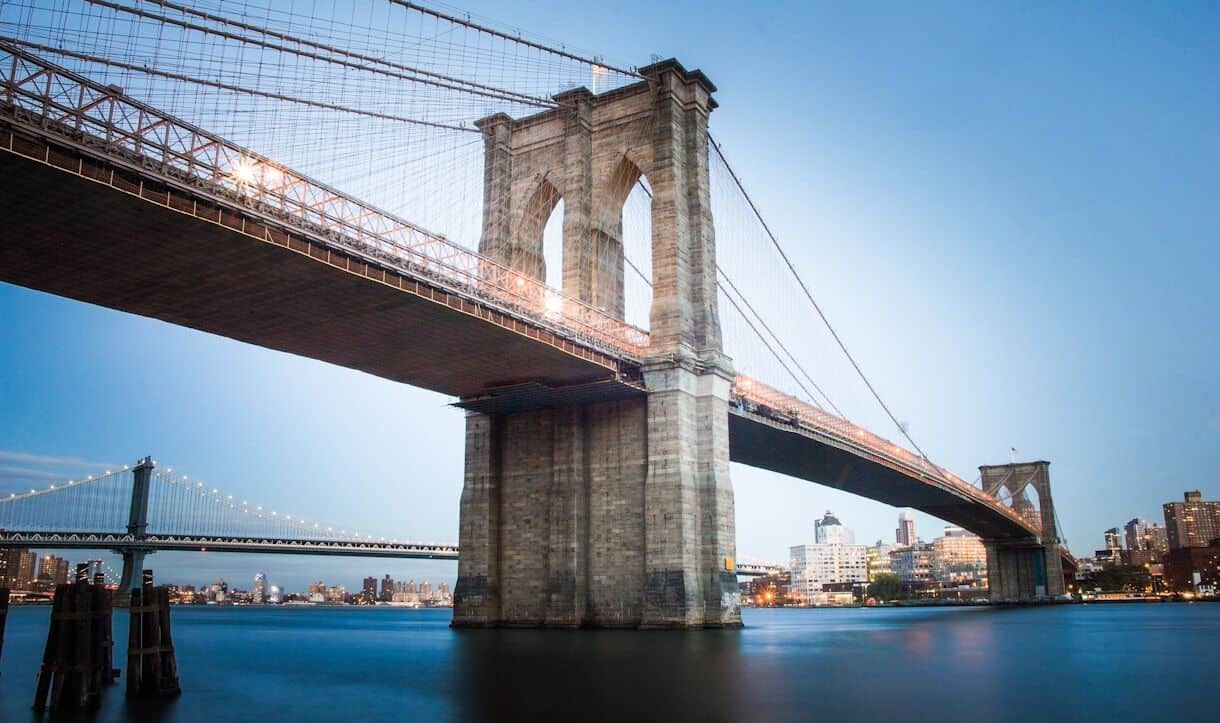
- The Brooklyn Bridge walk is free and delivers one of the best views in the city.
- The Staten Island Ferry runs 24/7 and is free. It passes close to the Statue of Liberty and offers the best cheap view of the harbor.
- The High Line, an elevated park built on old rail tracks running through Chelsea, is free and worth a walk.
- Many museums have pay-what-you-wish hours or days. The American Museum of Natural History has suggested admission for New York state residents but is otherwise fixed price for tourists.
- Free events happen constantly in summer. Central Park SummerStage, Bryant Park movies, and various free concerts run through June, July, and August.
Eat With a Plan
New York’s restaurant scene is deep enough that you can’t just wing it. The best places book out weeks in advance for prime times, and walking into the first restaurant you see is a good way to end up spending too much on a mediocre meal.
A few strategies that work:
- Book one or two anchor meals for the trip in advance, ideally at least two to three weeks out for anything popular. Resy and OpenTable cover most restaurants.
- For lunch and casual meals, walk-ins are more feasible. Diners, pizza joints, and bagel shops don’t take reservations.
- Eat outside of the tourist zones for better meals at lower prices. Times Square restaurants are almost universally worse than restaurants 10 blocks in any direction.
- Try one iconic New York food category. Pizza (Joe’s, Prince Street, or a proper Neapolitan slice depending on your preference), bagels (Ess-a-Bagel, Absolute Bagels), and pastrami (Katz’s) are the three most-cited options.
Book the Non-Negotiables First
If there’s something specific you don’t want to miss (a particular Broadway show, a specific restaurant, a limited-run museum exhibition), book it before you finalize the rest of your trip. New York gets busy enough that the thing you most wanted to do can be sold out for your entire visit if you don’t move on it early.
Once the anchor bookings are in place, build the rest of the trip around them. That’s a more efficient way to plan than starting with a general itinerary and then trying to find open slots for the specific things you care about.
A Realistic Long Weekend Itinerary
For three full days, a workable framework:
- Day 1: Arrive, drop bags, and use the afternoon for a walk through a downtown neighborhood (West Village or SoHo). Evening in the neighborhood you’re staying in.
- Day 2: Start early with a major sight (Statue of Liberty, Empire State Building, or a museum). Afternoon free for wandering. Dinner and a Broadway show in the evening.
- Day 3: Cross to Brooklyn. Walk the bridge, spend time in DUMBO or Brooklyn Heights, have a meal in Williamsburg. Return to Manhattan for the evening.
Three days isn’t enough to see everything, and trying to see everything is the trap that ruins the trip. Pick the version of New York you most want to experience (culture, food, walking, nightlife) and lean into it. The city will still be there next time.
Featured image by Alexander Rotker on Unsplash
FOLLOW US ON INSTAGRAM


Information published on this website and across our networks can change over time. Stories and recommendations reflect the subjective opinions of our writers. You should consult multiple sources to ensure you have the most current, safe, and correct details for your own research and plans.