
Why Florida Is an Excellent Choice for Diving Vacations
Skip to Section
Florida is one of the most popular scuba destinations in the United States, and the reasons go deeper than the obvious. The state has more accessible dive sites within driving distance of major airports than almost anywhere else in the country, water temperatures that stay comfortable most of the year, and a range of underwater environments you’d otherwise have to visit several countries to see. Add in one of the most developed dive infrastructures in the world, with hundreds of shops, charters, and training facilities, and you have a scuba destination that works for first-timers and experienced divers equally well.
If you’re planning your first diving vacation or trying to figure out where to go next, here’s the case for Florida.
The Weather Is Great Almost Year-Round

Most dive destinations have a clear season and an off-season. Florida has neither in the traditional sense. The state’s subtropical climate keeps water temperatures suitable for diving year-round, so you can plan a trip in December or July and still get in the water.
That said, conditions vary by region and month. Summer months bring the warmest water, the best visibility in most areas, and the migration of the majority of tropical species. Winter months can bring cooler water in the northern parts of the state, but the Keys stay warm enough for comfortable diving in a 3mm wetsuit. Hurricane season runs June through November and can affect trip planning, particularly in September and October when storms are most active.
The year-round recommendations for Florida diving break down what’s best when, which is worth reading before you book. Certain sites are dramatically better in specific months, and matching your trip to the calendar makes a real difference in what you’ll see.
Variety You Can’t Find in Most Single Destinations
Florida has three distinct diving regions, each with its own character. Most divers pick one for a given trip, but the range means you can come back several times without repeating yourself.
The Florida Keys, running from Key Largo down to Key West, are the most famous scuba region in the state. The Florida Reef, one of the largest barrier reefs in the world, runs alongside the Keys and offers reef diving that rivals the Caribbean. John Pennekamp Coral Reef State Park in Key Largo is the first undersea park in the United States and a common starting point for new divers.
The Atlantic coast, particularly around West Palm Beach, has some of the best drift diving in the country. The Gulf Stream runs close to shore, which produces strong currents and consistently good conditions for seeing larger pelagic species. Blue Heron Bridge in Riviera Beach is one of the best shore dives in the world for macro photography.
The Gulf Coast, including sites off Pensacola and Panama City, offers artificial reef diving on decommissioned oil rigs and purpose-sunk vessels. The water is often less clear than the Atlantic side, but there is a ton of marine life, and the region is generally less crowded than the Keys.
If you’re weighing East and West Coast dives, it comes down to what you want to see: the Atlantic side for reef and pelagic diving, the Gulf side for wreck and artificial reef diving with generally calmer surface conditions.
Marine Life that Rewards Repeat Visits
The wildlife in Florida waters is what brings most divers back for second and third trips. The species mix varies by season and region, but a well-planned dive trip almost always yields memorable encounters.
Some of the more notable sightings:
- Goliath grouper, which can weigh over 800 pounds, aggregate around wrecks and reefs in the summer for spawning. Jupiter, on the Atlantic coast, is one of the best places in the world to see them.
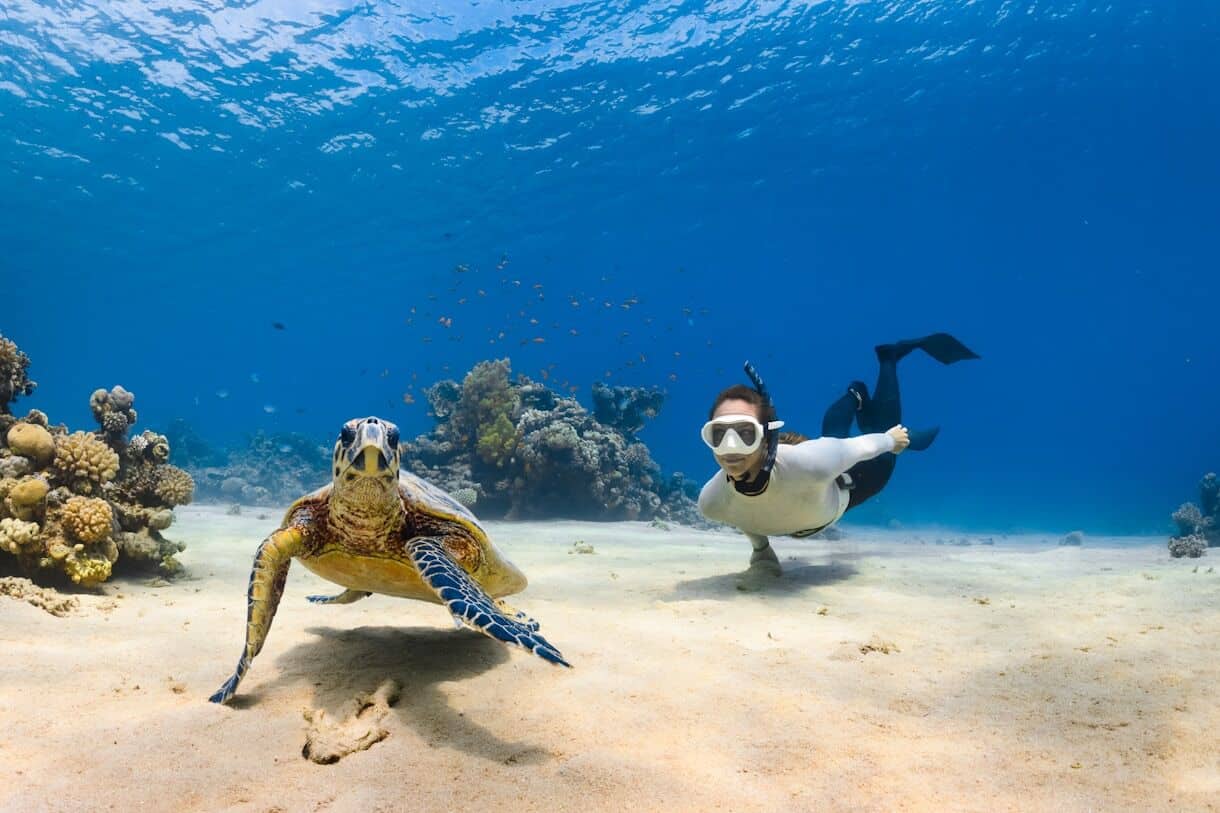
- Sea turtles are common on reefs throughout the state, with loggerheads, greens, and hawksbills all resident in Florida waters. Nesting season runs May through October, and you may catch sightings of hatchlings at some sites.
- Manatees gather in the Crystal River area on the Gulf Coast during the winter months, when the springs remain warmer than the surrounding water. Snorkeling with manatees is regulated but permitted at specific sites.
- Sharks are frequently seen on Florida dives. Nurse sharks are common on almost every reef. Lemon sharks aggregate off Jupiter in winter. Bull sharks and hammerheads appear regularly on the Atlantic side, particularly around wrecks.
- Dolphins are seen more often than most divers expect, particularly during boat rides between sites. Bottlenose dolphins are the most common species.
- Reef fish diversity is high, with over 500 species recorded in Florida waters. Parrotfish, angelfish, snapper, and barracuda are standard sightings on most reefs.
Research the specific site and season before booking a trip focused on a particular species. Migration and behavior patterns matter more than most first-time divers realize.
The Shipwreck Capital of the Atlantic
Florida has more diveable shipwrecks per square mile of coastline than anywhere else in the Atlantic. The combination of centuries of shipping traffic, hurricanes, and a state-run artificial reef program that intentionally sinks decommissioned vessels has produced a genuinely staggering number of wreck dives.
The wrecks range from centuries-old Spanish galleons to modern sinkings within the last few years. Some highlights across the state:
- The USS Spiegel Grove, off Key Largo, is a 510-foot Navy landing ship dock sunk as an artificial reef in 2002. One of the largest artificial reefs in the world.
- The USNS Vandenberg, off Key West, is a 522-foot missile-tracking ship sunk in 2009. Deep enough (140 feet at the bottom) to require advanced certification for the full wreck.
- The USS Oriskany, off Pensacola, is a 911-foot aircraft carrier sunk in 2006. The largest artificial reef in the world and a bucket-list dive for experienced wreck divers.
- The Duane, off Key Largo, is a Coast Guard cutter sunk in 1987 and now covered in coral growth. One of the most photographed wrecks in the state.
For beginners interested in wreck diving, PADI’s guide to scuba diving Florida Keys shipwrecks covers the basics of what to expect and how to plan a wreck-focused trip. Wreck diving requires specific training beyond open water certification for penetration dives, so plan accordingly if you want to go inside the vessels rather than just around them.
Some wrecks also have historical value beyond the diving itself. The 1733 Spanish Plate Fleet, wrecked by a hurricane off the Keys, still has debris fields divers can visit. The San Pedro Underwater Archaeological Preserve is one of the more accessible historic wrecks.
The Dry Tortugas: A Diving Destination in Its Own Category
Seventy miles west of Key West, the Dry Tortugas sit at the edge of what most divers ever reach in Florida. The area is only accessible by boat or seaplane, which keeps the diving pressure low and the reefs healthier than most sites closer to shore.
The park protects a mix of coral reefs, historic wrecks, and one of the largest 19th-century masonry forts in the country. Diving here is a commitment – most trips involve at least a day of transit each way, and multi-day liveaboard trips are common – but the reward is diving conditions that feel closer to remote Caribbean destinations than to mainland Florida.
Diving Infrastructure that Works for Beginners and Pros
One of the underrated advantages of Florida diving is how developed the infrastructure is. Almost every coastal town has multiple dive shops, most of which offer training from Open Water certification through Instructor levels. Boat dives are widely available at reasonable prices compared to international destinations. Rental gear is standard and well-maintained at reputable operators.
For new divers, Florida is one of the easiest places in the world to get certified. The warm water, calm conditions at protected sites, and abundance of instructors make it an ideal training environment. Certification courses typically run three to four days and cost significantly less than in many international dive destinations.
For experienced divers, the state offers specialty training in wreck penetration, technical diving, cave diving (the north-central springs region has some of the best cave diving in the world), and rebreather use. Certifications earned in Florida are recognized globally.
Beyond the Diving: What to Do on Surface Days
Most dive vacations include surface intervals that are longer than the actual diving. Florida delivers here too, which matters for trips with non-diving partners or family members.
The Keys have some of the best key lime pie in the world, a delightfully weird bar and restaurant scene in Key West, and enough historic sites (Ernest Hemingway’s house, the Southernmost Point, Fort Zachary Taylor) to fill a rainy day. The Everglades are within driving distance of both coasts and offer wildlife viewing that pairs well with a diving trip. The Kennedy Space Center is on the Atlantic coast and worth a day. Miami and Fort Lauderdale offer urban options if you want a break from the water.
For families, most beach towns have accommodations that work for kids, and the shore snorkeling at sites like John Pennekamp lets non-divers see reef fish without needing certification.
Practical Planning Notes
A few things worth knowing before you book:
- Certification is non-negotiable. Open Water Diver is the minimum for most guided reef dives. Advanced Open Water opens up deeper wrecks and drift dives. Nitrox certification extends bottom times significantly and is worth adding if you plan multiple days of diving.
- Get insurance. DAN (Divers Alert Network) membership includes accident insurance and is strongly recommended for any dive trip. Insurance costs are minimal compared to the cost of a potential evacuation.
- Bring your own mask if it fits well. Rental masks fit most people acceptably but not well.
- Book dive charters in advance during peak season (December through April in the Keys, summer on the Panhandle). The best operators fill up.
- Bring cash for tips. Boat crew are typically tipped 10-15 percent of the trip cost, similar to other service industries.
Florida works wonderfully as a first dive trip and as a return destination. The combination of accessibility, variety, and infrastructure means you can get in the water within a day of arriving and see something worth remembering. Pick the region that matches what you want to see, book the training or the trip in advance, and let the water do the rest.
FOLLOW US ON INSTAGRAM


Information published on this website and across our networks can change over time. Stories and recommendations reflect the subjective opinions of our writers. You should consult multiple sources to ensure you have the most current, safe, and correct details for your own research and plans.