
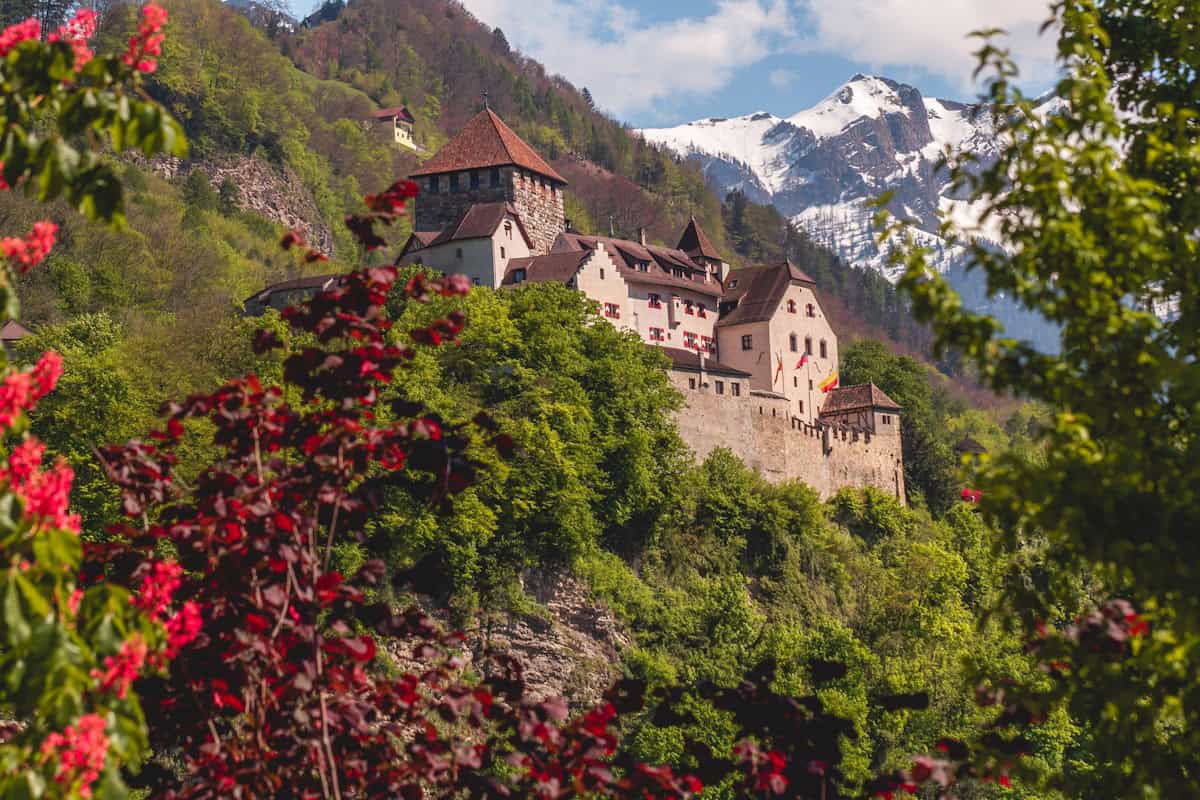
Why Does Liechtenstein Have No Army, and How Do They Stay Safe?
By: Heather Keys
Skip to Section
Liechtenstein is one of the world’s most curious defense paradoxes: a completely demilitarized nation that hasn’t been invaded in over 150 years. This tiny Alpine country proves that sometimes the best military strategy is having no military at all.
The End of an Era
Liechtenstein’s journey to demilitarization began with an almost comical military expedition. In 1866, the principality sent 80 soldiers to support Austria in the Austro-Prussian War. When the conflict ended, all 80 soldiers returned home unharmed. According to popular local history, they even brought back an 81st person – an Austrian liaison officer who had befriended the unit and decided to join them in Vaduz.

This bloodless adventure marked Liechtenstein’s final military engagement. By 1868, facing financial pressures and recognizing the futility of maintaining an army for such a small nation, Prince Johann II disbanded the military entirely. This action made Liechtenstein one of the few nations in history to voluntarily and permanently demilitarize.
The Swiss Shield
Liechtenstein’s security strategy rests on a simple principle: strategic partnerships beat standing armies. Since 1919, Switzerland has provided diplomatic and consular services for Liechtenstein, representing the principality in countries where it has no embassy.
While no formal defense treaty exists, the relationship runs deep. Switzerland’s policy of armed neutrality creates a natural protective umbrella over its neighbor. Because the two countries share an open border and a postal and currency union, any threat to Liechtenstein’s sovereignty would inevitably be treated as a direct concern for Swiss national security.
Internal Security Without an Army
The absence of a military does not mean lawlessness. Liechtenstein maintains a National Police Force of approximately 160 employees (including roughly 125 sworn officers) for its 40,000 residents. This force handles everything from routine law enforcement to emergency response and border security.
For serious emergencies or natural disasters, Liechtenstein maintains mutual aid agreements with both Switzerland and Austria. This cooperative framework has proven more than sufficient for the principality’s needs, maintaining one of the lowest crime rates in the world.
Economic Armor
Liechtenstein’s true defense may lie in its economic importance. The country is one of the few nations with more registered entities than citizens – over 73,000 foundations, trusts, and companies for a population of roughly 40,000.
This status as a global financial center creates a web of interests that serves as a deterrent. Major corporations and private foundations from around the world maintain interests in Vaduz. In modern geopolitics, disrupting a global financial hub causes far more international backlash than attacking a traditional military target.
Geographic Advantages
Geography is Liechtenstein’s silent sentinel. At just 62 square miles, the country offers negligible strategic value to potential invaders. Furthermore, Liechtenstein is one of only two double-landlocked countries in the world, meaning it is entirely surrounded by nations that are themselves landlocked.
Any military force attempting to reach Liechtenstein would first have to violate the sovereignty of Switzerland or Austria. Since both of these neighbors maintain strict policies of permanent neutrality, they serve as a massive geopolitical buffer. The rugged Alpine terrain of the Rhine Valley further complicates any theoretical invasion, making the cost of aggression far outweigh any possible benefit.
Modern Security Challenges
Today’s threats rarely involve tanks or infantry. Liechtenstein addresses contemporary challenges – such as cybersecurity and financial crime – through international cooperation. The principality is an active member of INTERPOL and participates in numerous European security initiatives.
The country’s small size is an asset here; it is far easier to monitor and secure the digital infrastructure of 40,000 people than that of a large nation. By focusing on regulatory frameworks and international banking transparency, Liechtenstein protects itself from the frontlines of 21st-century conflict.
A Model for Micro-States?
For over 150 years, this demilitarized state has maintained its sovereignty and prosperity without firing a single shot. The money saved on defense spending is instead diverted into education, infrastructure, and social services.
While this model works specifically because of Liechtenstein’s unique geography and economic niche, it demonstrates a powerful lesson: security doesn’t always require military might.
About the Author
Originally from Indiana, Heather believes every destination has a story worth telling and a reason to visit. With a deep love of adventure, history, and psychology, she shares travel trivia, tips, and inspiration to encourage you to explore the world with curiosity and optimism. Read her other articles on Frayed Passport here.Featured image by Henrique Ferreira on Unsplash
FOLLOW US ON INSTAGRAM


Information published on this website and across our networks can change over time. Stories and recommendations reflect the subjective opinions of our writers. You should consult multiple sources to ensure you have the most current, safe, and correct details for your own research and plans.