

Visiting the Virgins: St. Croix in the USVI
Skip to Section
St. Croix is an 84-square-mile isle in the U.S. Virgin Islands. Roughly 40 miles south of St. Thomas, St. Croix offers lush island scenery, excellent snorkeling, serpentine roads, America’s easternmost point—and a balmy climate, with year-round temps in the 70s and 80s.
My wife and I visited in February 2026, finding this tropical oasis a pleasant relief from our brutal mainland winter.
A Rum Situation

With European colonization of the island beginning in the 1600s, St. Croix was initially known for cotton and sugar; signs of the latter industry are still evident in many extant cone-shaped stone towers—once used for crushing cane.
Today, the island’s principal revenue sources include tourism and liquor—St. Croix being the current headquarters for Cruzan Rum.
These two thriving industries join welcoming hands at the island’s only airport (Henry E. Rohlsen, near the southern coast)—where arrivals get free samples of the firm’s flavored liquors.
Personally speaking, I found this poor preparation for an unfamiliar rented car and left-lane driving over bumpy, twisting roads.
With hairpin turns, bone-rattling potholes and spotty GPS, it took us over an hour to navigate the 10 miles to our Airbnb on the north shore. (Granted, this was partly due to several wrong turns—one of which led us so far up a snaking mountain lane that I barely got the car turned around.)
Sunny Shore Up
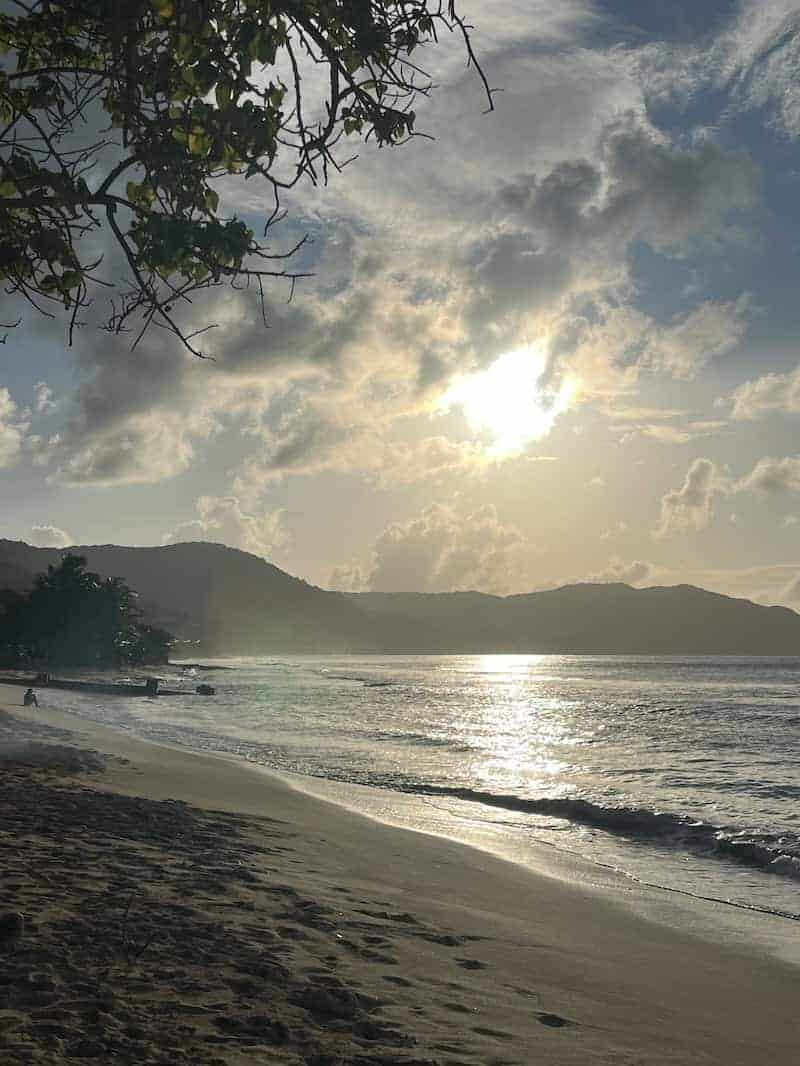
Sunset on Cane Bay Beach.
Happily, our condo sat right against the sparkling teal-and-turquoise sea—and just a short walk from Cane Bay Beach, where legendary snorkeling and diving features a 3000-foot vertical drop roughly 200 yards offshore.
Cane’s attractions also include a popular morning food truck (“Sunny Shore Up“), plus several restaurants—introducing us to the fact that on St. Croix, eateries don’t always look like eateries.
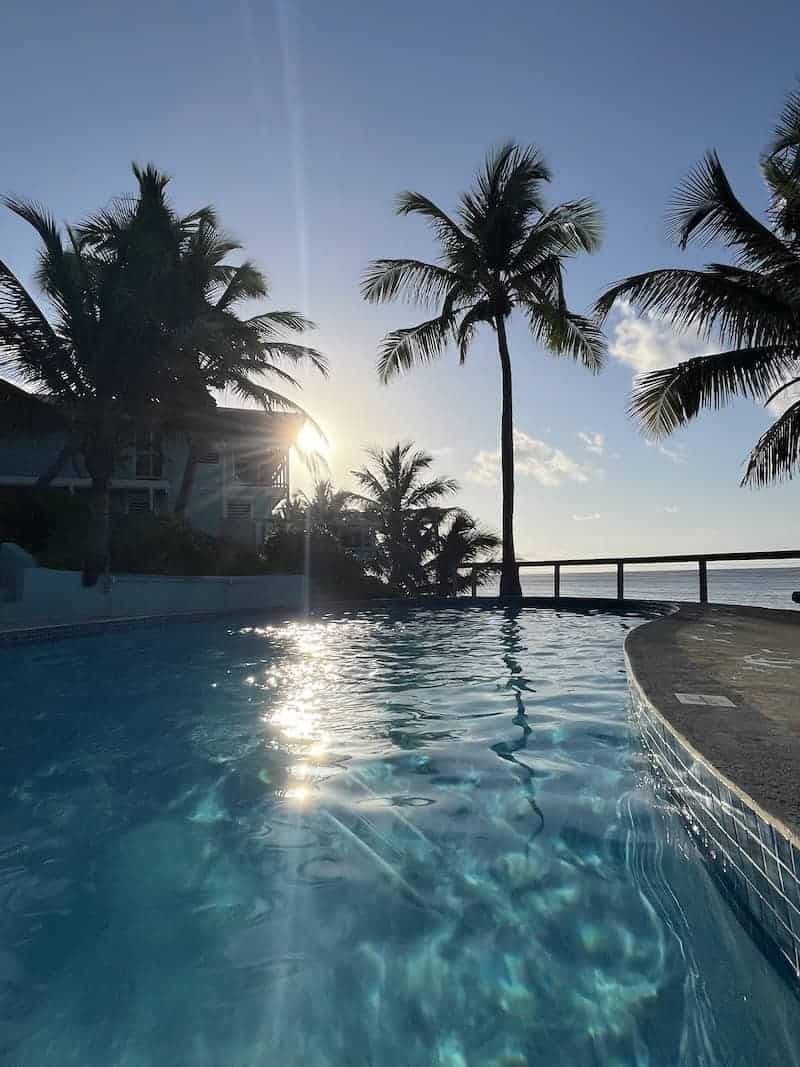
Seaside swim near sunset along Cane Bay.
Many seem frankly thrown together: a few railings, canopy roofing and no walls; one at Cane had its tiny kitchen inside a shipping container! A frequent visitor explained that this building style accommodates Caribbean hurricanes: it allows damaged premises to be torn out and replaced with speed, ease and regularity.
Snorkeling Trail
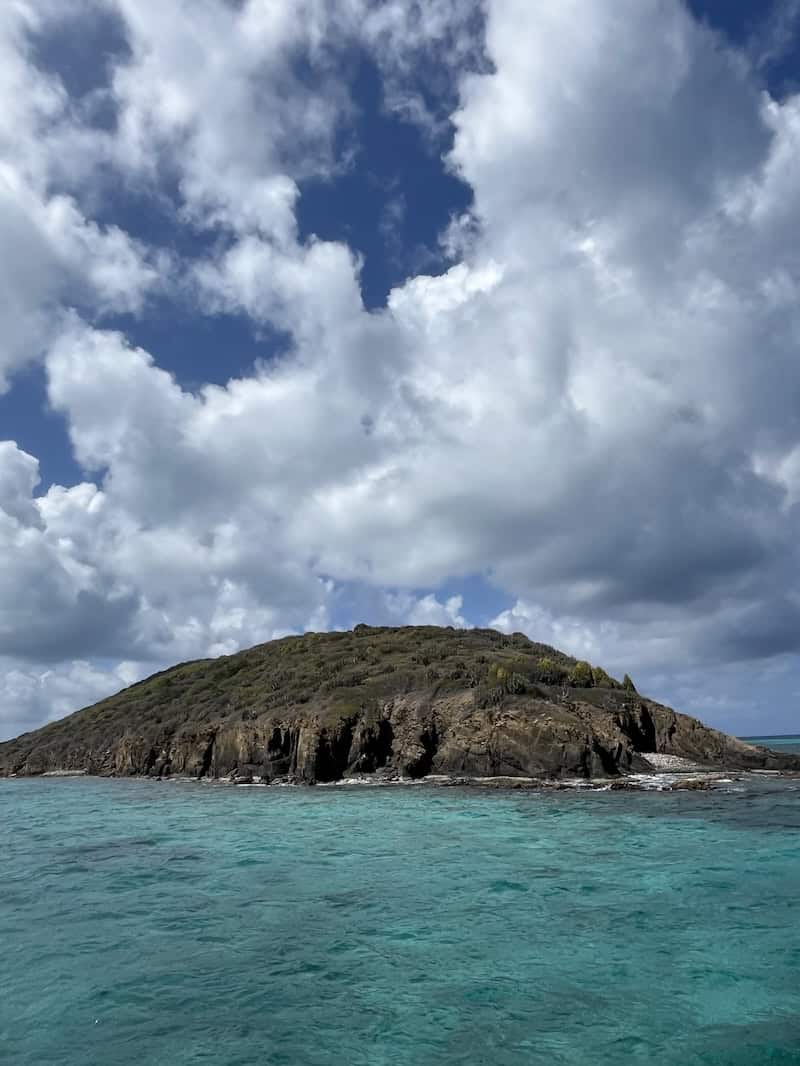
Buck Island.
We spent much of our first afternoon navigating Christiansted—the island’s principal city, where one-way streets lined with cars make parking look problematic. But be patient; spaces do open up regularly. Plus, there’s a sizable lot along Strand Street, close to the oceanfront boardwalk—and to a delightful assortment of shops and restaurants.
Like Cane Bay and the island’s other major town—Frederiksted, in the west—Christiansted offers numerous excursions for boating, fishing, snorkeling and scuba-diving. The most popular go-to is Buck Island Reef National Monument, about which the Frommer’s travel guide says, “Some call it the single most important attraction of the Caribbean.”
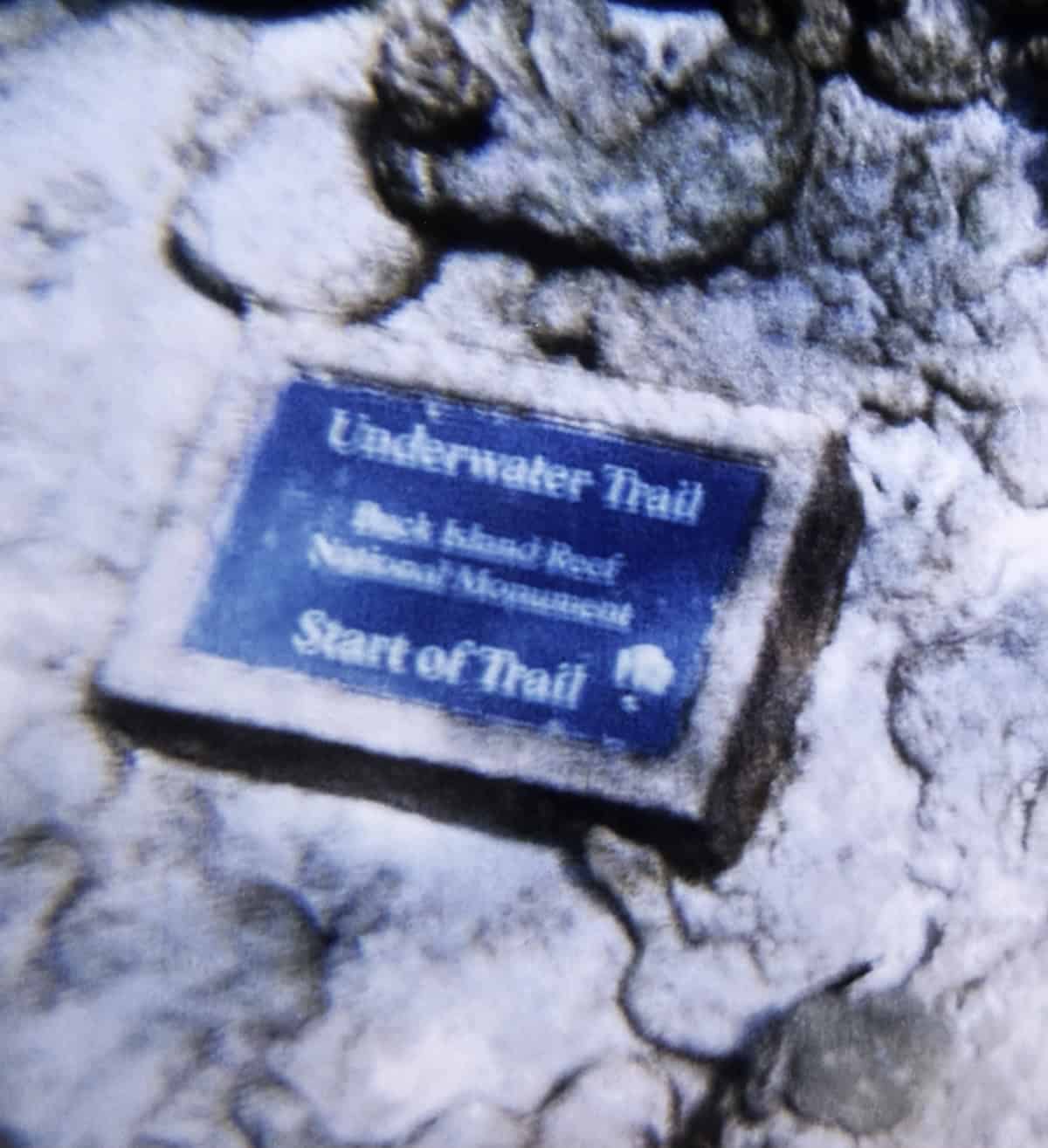
Beginning of underwater snorkel trail at Buck Island Reef National Monument.

Eagle ray at Buck Island.

Barracuda near the snorkeling trail.
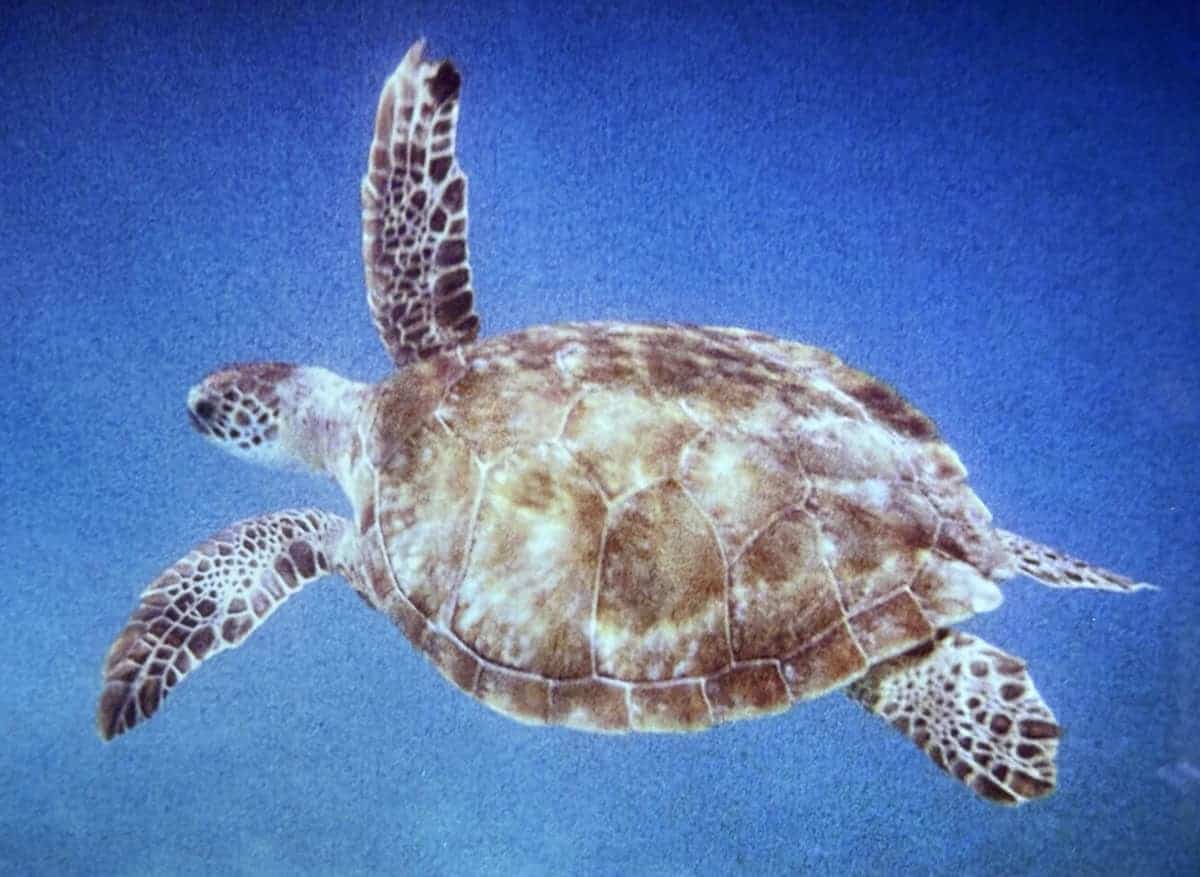
Sea turtle off Buck Island.
Overseen by the U.S. National Park Service, Buck Island is a 45-minute boat ride to the northeast. It includes a gleaming white beach and, off its eastern end, an underwater “snorkeling trail,” with plaques to guide swimmers through submarine grottos—shimmering with shadows, colorful fish and towering, jungle-like stands of coral.
We saw turtles, eagle rays (spotted, with a white beak), flounder, tangs, parrotfish and several massive barracudas; hovering motionless just off the sea floor, these latter look for all the world like a prowling German U-boat.
Our particular cruise included post-snorkel rum punch—staunchly encouraged by our captain, who insisted, “The more you drink, the better I sail.” Then we anchored at a St. Croix beach for a cookout of burgers, dogs and fresh mahi mahi.
Here, the picnic grounds were teeming with hungry hermit crabs, and we also spotted—a thrilling first for this animal-lover—countless mongooses scuttling furtively through the surrounding brush.
Staples, Streets and Strays
Our upscale underwater camera died early on during this vacation—so please excuse the sketchy snorkeling shots from two disposables we picked up; there are no big-box stores or major electronics retailers on St. Croix.
Indeed, visiting the island often feels like stepping 20 or 30 years into the past.
The aforementioned roads generally lack lane stripes. They wind wildly up & down and back & forth—with hairpin turns on slopes so steep that there’s no visibility around the bend.
Narrow lanes are compounded by oncoming drivers seizing more than their fair share of tarmac, and the jaw-dropping potholes are so frequent, huge, and closely spaced that many are marked out by circles of reflective highway paint.
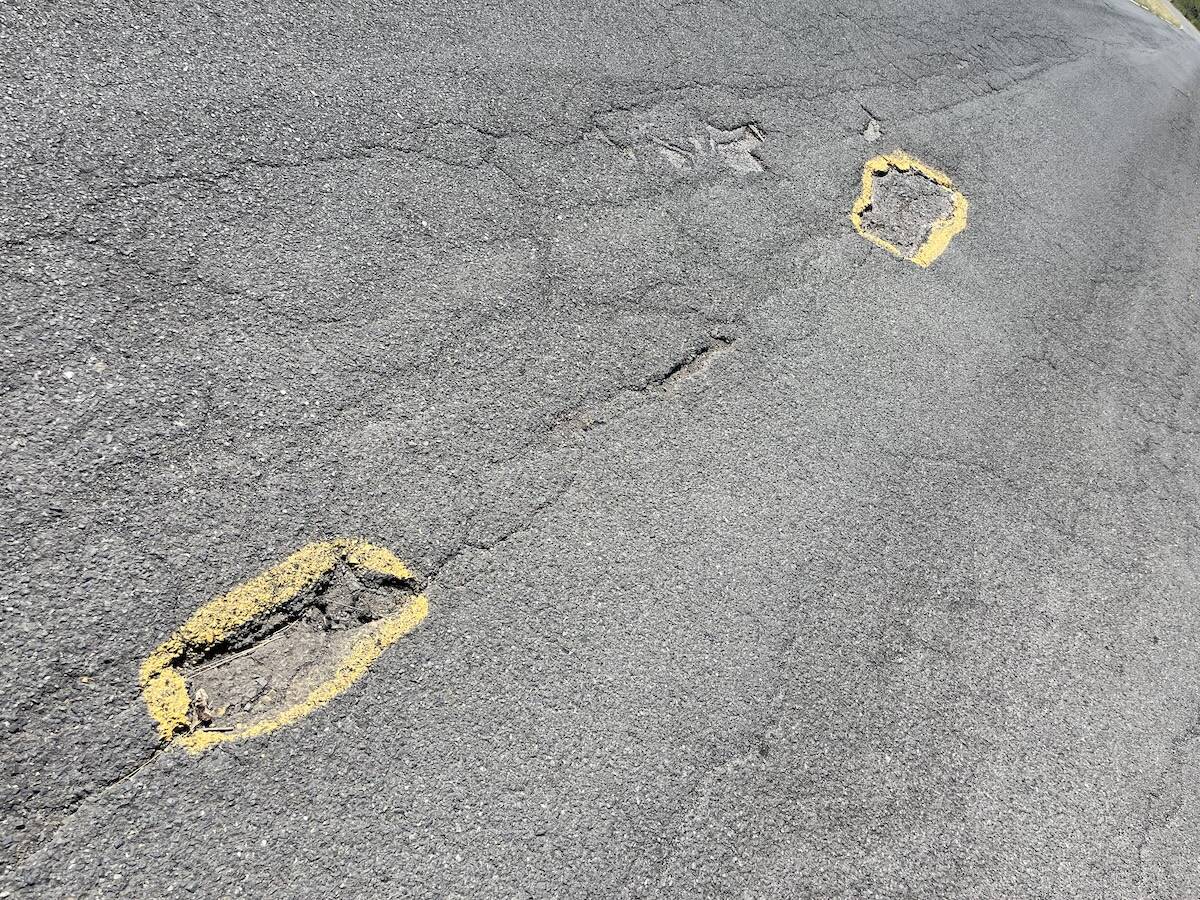
Marked-off potholes along North Shore Road.
And watch for the ubiquitous stray dogs; one was lying calmly right in the middle of a well-traveled route. (In fairness to the pooch—that is where the shade was.)
Like the roads, grocery stores likewise have an old-fashioned feel; it’s kind of hit-and-miss as to what you might find and where. One-stop shoppers might seek out the larger, more modern Market St. Croix and Plaza Extra East. But all groceries and gas stations appear to be well stocked with wine, liquor and beer; I fell in love with Mackeson Triple XXX Stout—out of Trinidad and Tobago.
Daily News
Indeed, I was doubly thrilled because in addition to sampling native brews, I also like to grab local newspapers wherever I travel. In recent years, these have become increasingly rare and hard to find, but the trim, informative Daily News—covering both the U.S. and British Virgins—is readily available all over St. Croix.
This newspaper was especially handy, as it lists the cruise ship schedule, which affected our visit to another snorkel-and-dive hotspot: the pier at Frederiksted, where you can’t swim when ships are docked.
We’d been warned by seasoned travelers not to leave valuables in our car or on the beach. But…phones and wallets don’t fare well in the sea—so what to do when snorkeling?
At Frederiksted, I finally ducked into a dive shop and asked at the desk: Valuables in our car or on the beach?
“Neither,” said the cheerful young attendant. “Just stash your stuff in back there.”
With that load off my mind, we snorkeled out for more great fish—not quite mustering the fortitude to paddle all the way to the end of the pier. That’s nearly a third of a mile, but those remoter waters are famed for squid, octopi and sea horses.
Sandy Point Redemption
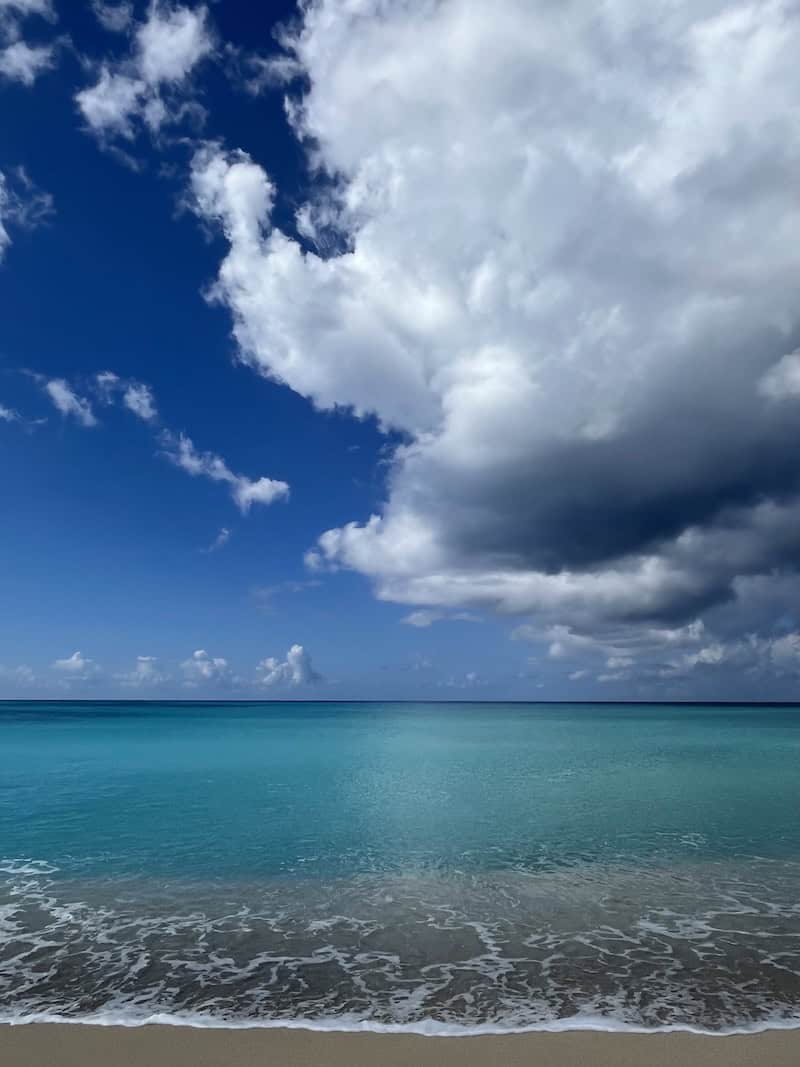
Sandy Point Beach, where the final scene of Shawshank Redemption was filmed.
While on the western shore, we stopped at Sandy Point National Wildlife Refuge, which has the USVI’s largest beach. As one of only two American nesting sites for the endangered leatherback sea turtle, this tranquil spot has limited hours (10-4 on weekends); the place was almost empty on that sunny Sunday morning. Its pristine white beaches and glowing turquoise waters are instantly recognizable as the site where the final scene in Shawshank Redemption was filmed.
On the western end, we also had our coolest wildlife encounters.
I had recently added bananaquit to my giant list of oddball vocabulary. This small tropical bird is named for its bright coloring—with the final “quit” likely imitative of its cry. In the lot at Sandy Point, I heard an unfamiliar call and whipped out my Merlin app—which instantly ID’d it as…a bananaquit!
Now, birders know that just because you hear a species, that doesn’t mean you can find it with your eyes; but sure enough, there the yellow fellow sat on a low branch less than 10 feet away—as if posing just for me.
The Road Not Taken
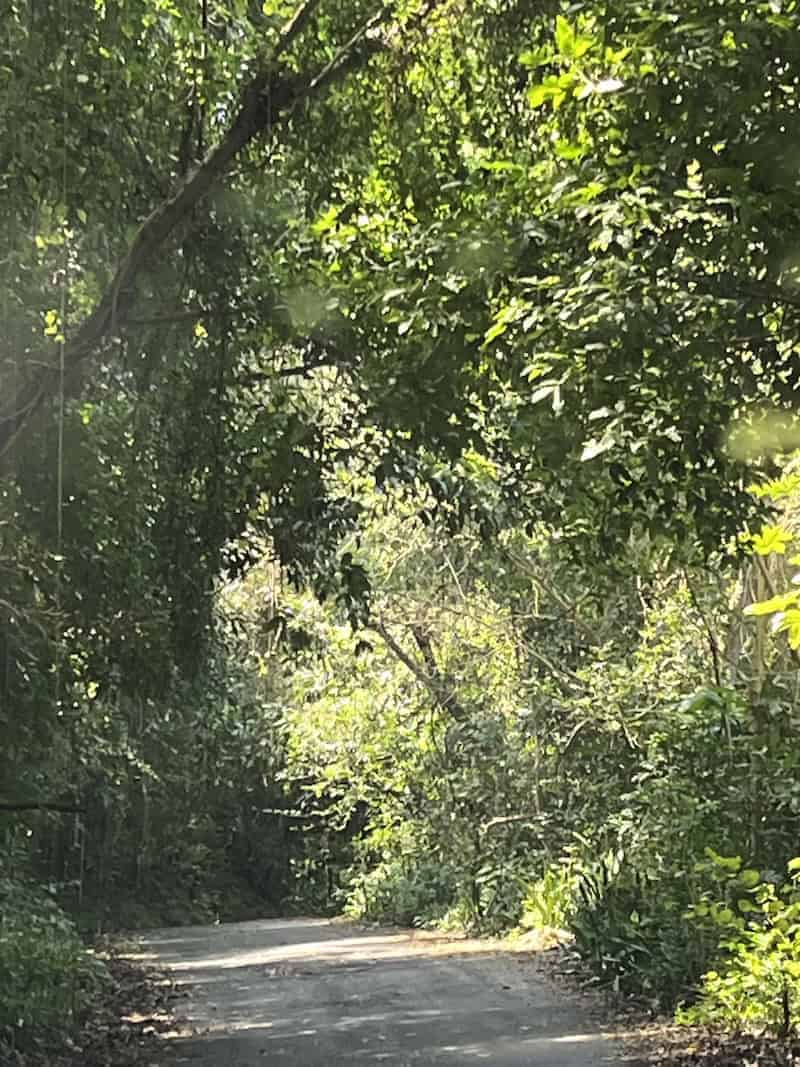
St. Croix’s Route 58, allegedly a two-lane, winds narrowly into the island’s “tropical rain forest.”
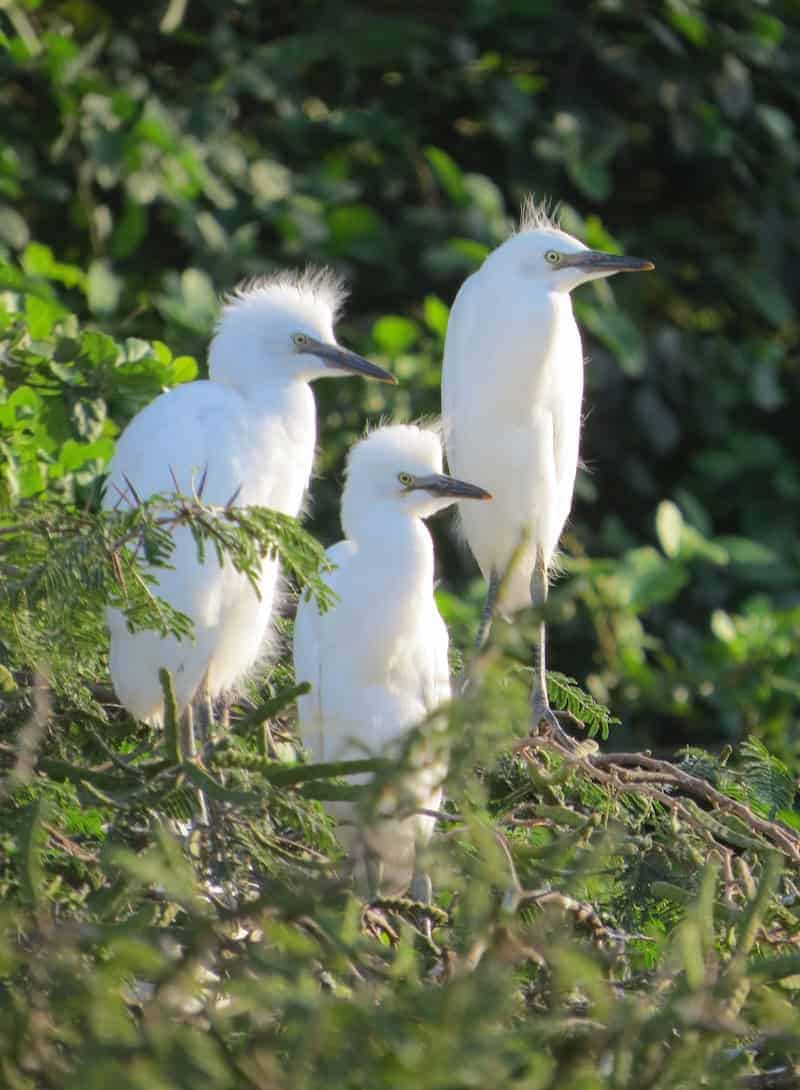
Three egret fledglings in a tree near Frederiksted.
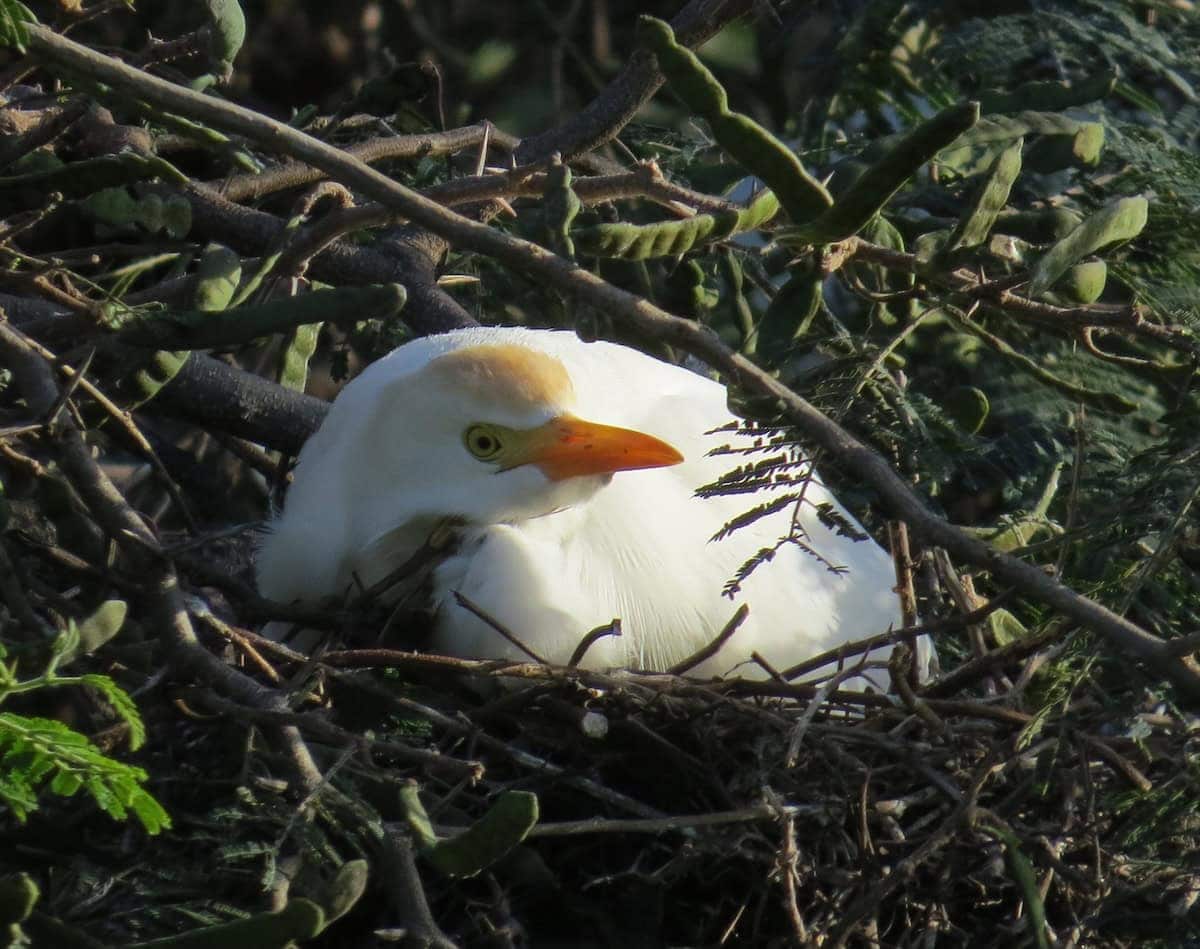
Nesting egret.
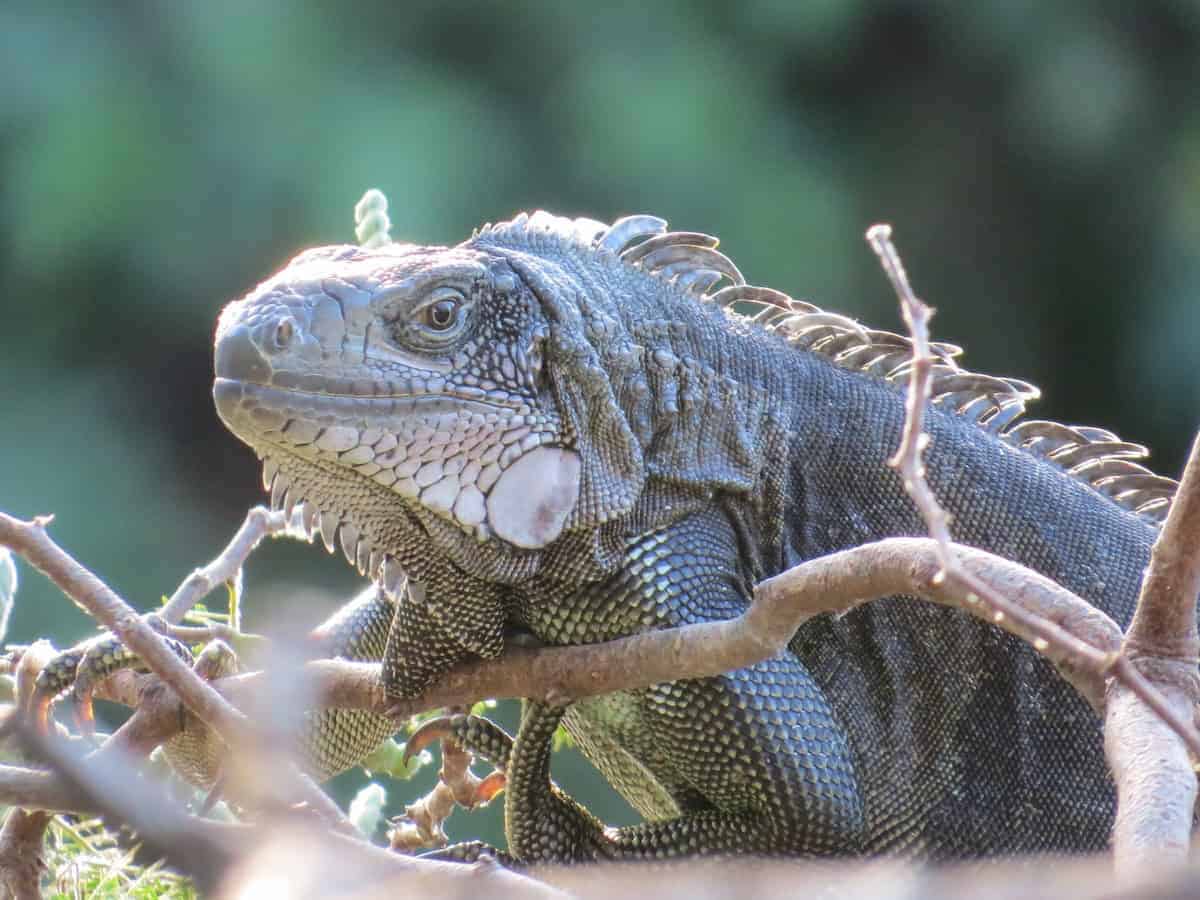
Iguana, also in a tree.
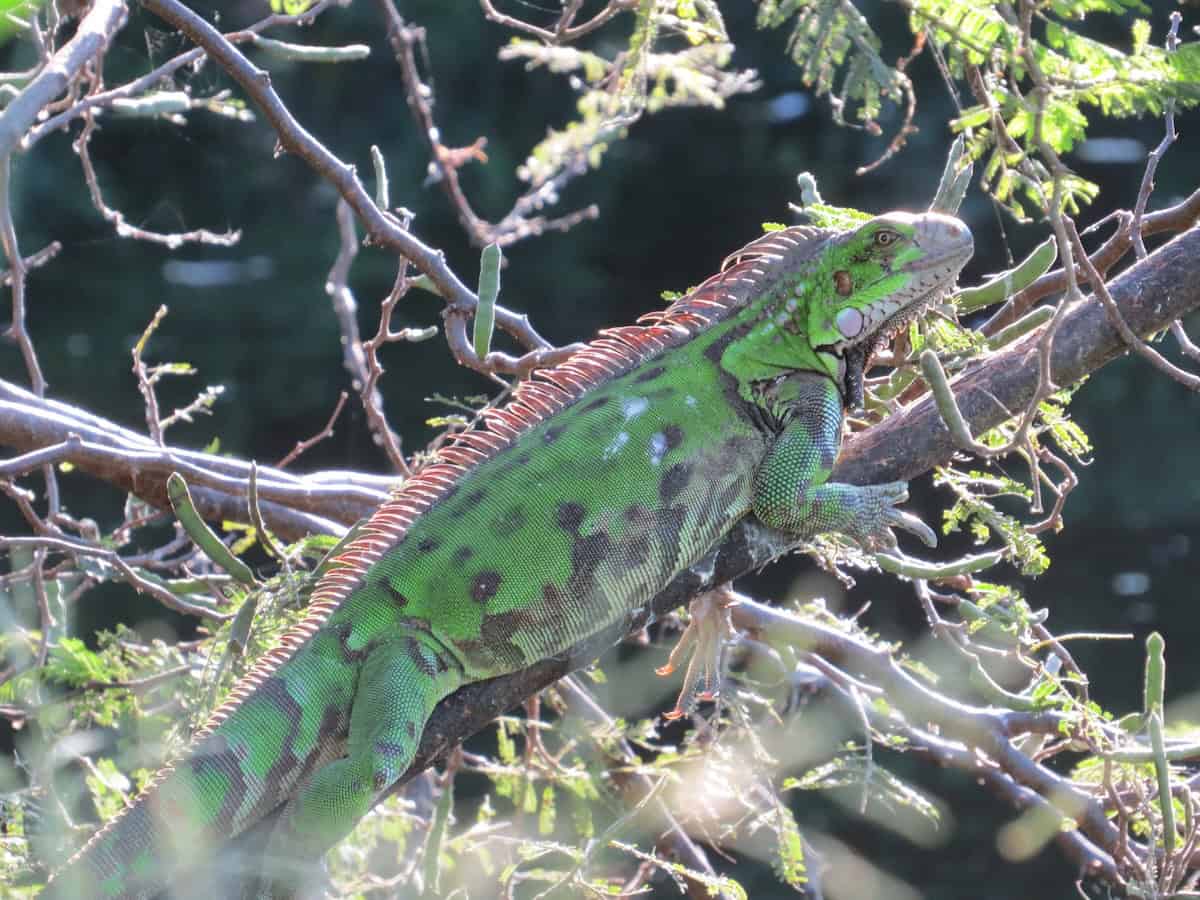
Colorful iguana near egret nests—probably waiting to sneak an egg or two.
Heading back to Cane, I suggested Route 58, which winds through St. Croix’s “tropical rain forest.” Though it doesn’t technically qualify, the terrain looks enough like jungle to warrant that nickname; but after two or three miles, the densely foliated, twisty “two-lane” was starting to feel more like a bike path. We turned around at Creque Dam—just as a pickup truck bore down from the opposite direction; I honestly don’t know how we could’ve passed each other.
Choosing LaGrange and Concordia roads instead, we happened upon a huge tree dotted with dozens of the white egrets—many fledglings, and many on nests. Scattered throughout the tree were five or six colorful iguanas—perhaps waiting to snatch an egg or two.
Watch Your Step
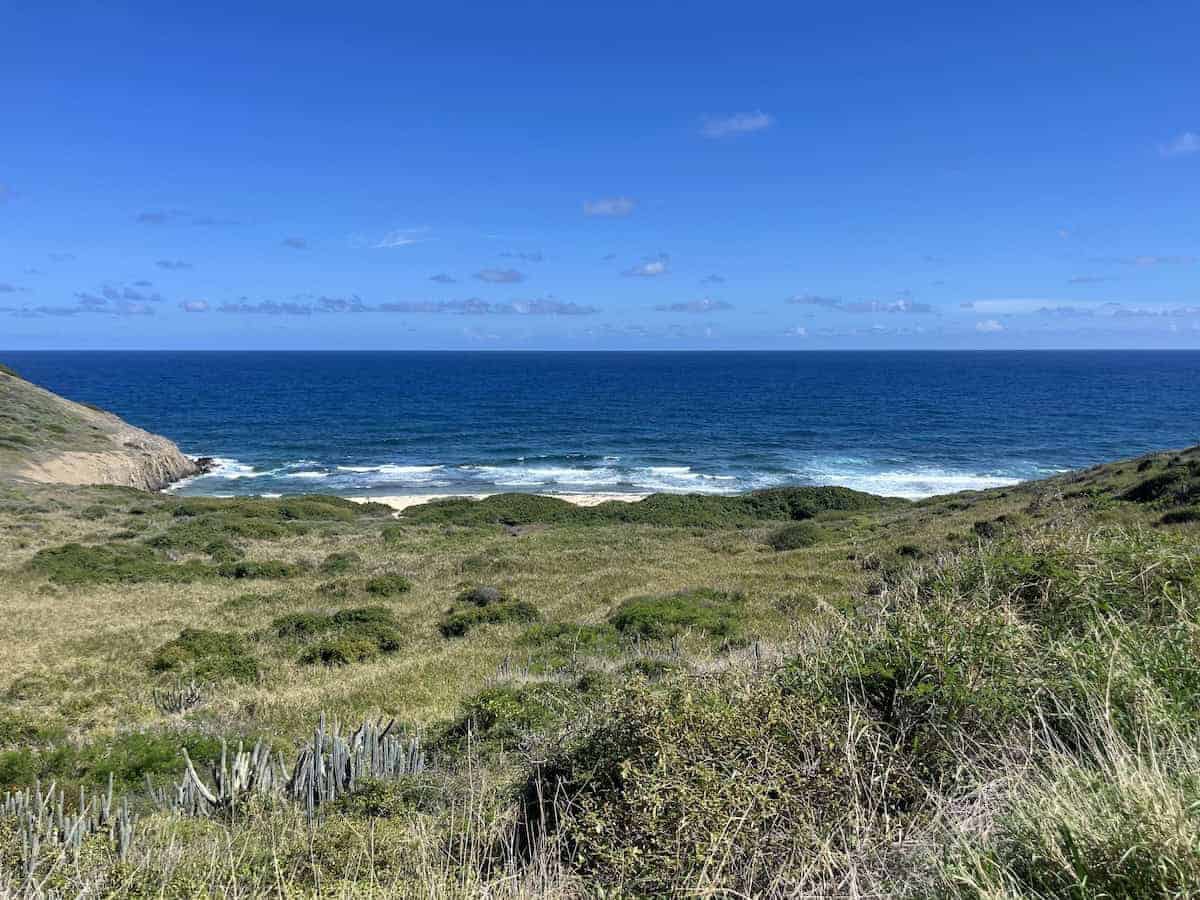
Atlantic Ocean from Point Udall—America’s easternmost point.
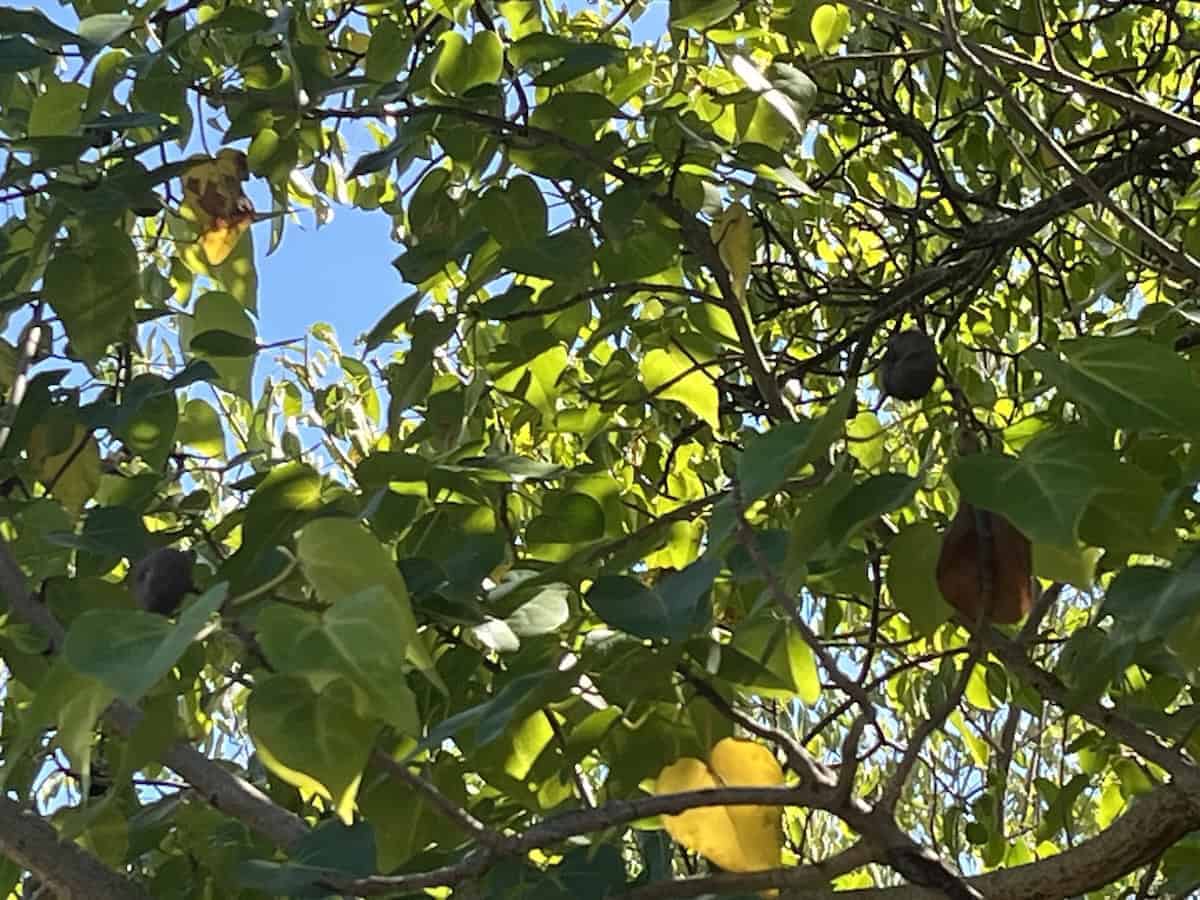
Manchineel tree with “don’t-touch” fruit; both the leaves and the “apples” are infamously toxic.
Our final day was an exploration of St. Croix’s eastern half, including Point Udall—where, as Frommer puts it, “the sun first shines on the United States.” I was spellbound by this majestic promontory: windswept landscapes, a distant wrack-strewn beach…and 4000 miles of Atlantic Ocean stretching out before us.
On your drive to and from Udall, look up and away from the water for the Moorish “Mountain Eyrie”—a palatial mountaintop mansion once owned (and designed) by the late Countess Nadia de Navarro-Farber.
Returning along the southern coast, I was likewise amazed by the now-largely-idle Limetree Bay oil refinery. Once among the world’s largest, it’s a labyrinth of tanks, pipes and towers, stretching easily a mile along the road. The site’s 2012 closure put 2,000 locals out of work.
Just before this, we had parked to walk to the wildlife-heavy Great Salt Pond; but we were deterred by manchineel trees lining the narrow dirt road. Widely distributed in the tropics of the Western Hemisphere—and also known colloquially as “the tree of death”—the manchineel bears leaves and fruit that cause nasty blisters, temporary blindness and, if ingested, severe gastric distress, perhaps even death.
Our cruise captain had told us that in pirate days, manchineel leaves were used for torture—and that even rain running off the bush can cause painful burns and blisters.
Nuff said.
Her Hand in Marriage
Having handily avoided plant-based toxic shock, we finished our last day at an upscale restaurant so close to the sea that its grounds include a tide pool—and surging surf that falls just short of the tables. Here, during dinner, atop one slightly damp stone outcrop, a young man proposed to his girlfriend; he was happily accepted—to great acclaim from fellow diners.
Since my wife and I were on the first stage of a 40th anniversary celebration, I found this an apt way to close our enchanting visit.
I somehow resisted trying to sneak home shells and sea-glass—this being strictly forbidden by Customs—but I wish I could’ve brought back some of that gorgeous tropical weather.
About the Author
Joseph W. Smith III is a writer, teacher and speaker in Central PA. Published in several websites and periodicals, Joe has also penned books on Hitchcock, the Bible, church life and under-the-radar movies—along with a volume of Great Jokes and Riddles. He plays trumpet in a community band; reads 100 books a year; serves as officer in his local church; struggles to keep cheering for the Buffalo Bills; listens to music whenever not sleeping; and maintains a small collection of unused postcards. He can be reached at robbwhitefan@gmail.com.All images courtesy of the author.
FOLLOW US ON INSTAGRAM


Information published on this website and across our networks can change over time. Stories and recommendations reflect the subjective opinions of our writers. You should consult multiple sources to ensure you have the most current, safe, and correct details for your own research and plans.