
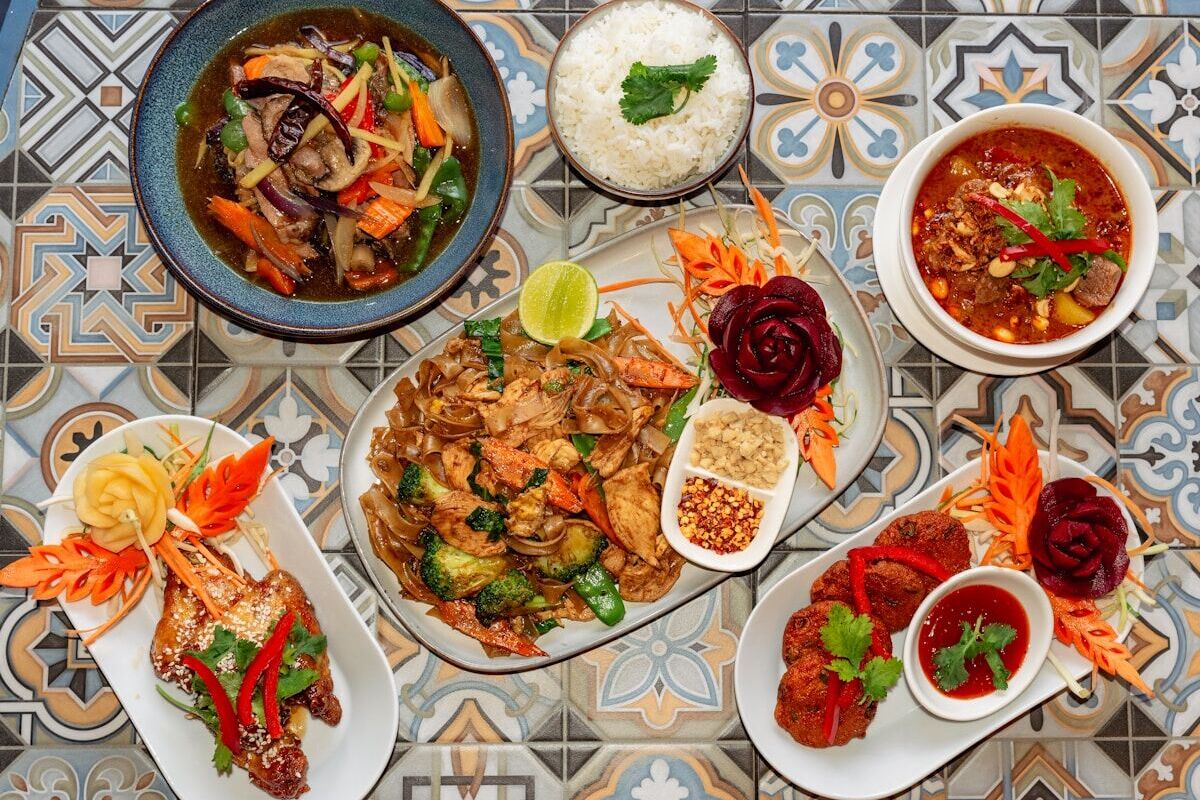
Getting Used to Thai Food as a Digital Nomad in Bangkok
By: Heather Keys
Skip to Section
Bangkok has become one of the busiest digital nomad cities in the world, and the food is a big part of why people stay longer than they planned. The cafes are good, the wifi is fast, the co-working spaces are well-equipped, and Thailand’s digital nomad visa makes it easier than ever for remote workers to set up a base for months at a time.
If you’re living in Thailand for longer than a few weeks, you’ll want to start finding your place in the community – and food is a great place to dig in! Sticking to Western food at expat cafes is an option, but it’s expensive, and a lot of it is the same food you could get at home. If you’re craving a more authentic experience, real Thai food won’t disappoint.
Start with Restaurants

The instinct when you arrive is to head straight for the night markets, which is exciting, but could backfire. You may not know what most of the dishes are, it can be difficult to pronounce the names without practice, and you may have a bit of trouble distinguishing what tourists get upsold and what locals really like and recommend. It’s a fun story, but a rough way to learn the cuisine!
Better approach: spend your first week or two eating at sit-down restaurants with menus that include photos and descriptions. This can help you learn what you like before you start ordering blind.
A solid starting point is Baan Khanitha, a Michelin-recommended Thai restaurant in Bangkok that offers a balance between traditional flavors and an elevated dining experience. Baan Khanitha is known for its emphasis on authentic recipes and fresh ingredients, ensuring regional dishes reflect the depth of Thai cooking in a way that is accessible to international travelers. Trying some great dishes at a highly rated restaurant when you first arrive in Thailand can tell you what meals like green curry, tom kha, and pad krapao taste like, and can help you figure out what you prefer.
Learn the Building Blocks Before the Dishes
Thai food makes a lot more sense when you understand the ingredients rather than memorizing dish names. A few worth knowing early:
- Galangal looks similar to ginger, but tastes like spices, citrus, and pine.
- Kaffir lime leaves give tom yum and many curries their distinctive sharpness.
- Thai basil has an anise note that regular basil doesn’t.
- Fish sauce is in tons of dishes – you’ll need to get used to it if you’re not a fan already.
- Bird’s eye chilies are in a lot of meals – they’re small, green or red, and very spicy.
Once you can identify these in a dish, you’ll start understanding why two curries taste different even when they look similar, and you’ll be better at ordering things you’ll really love.
Pay Attention to Where Locals Eat
Chances are you won’t eat at high-end restaurants for every meal – you’ll start to expand your meal preferences to street stalls, food courts in shopping malls, small neighborhood shops, chains, and local establishments.
Lunch in Thailand is usually a single-plate dish, like kao pad (fried rice), kao man gai (chicken rice), or pad see ew. Shared dinners are very common, with several dishes ordered for the table.
Street food is fast, cheap, and delicious. A full meal can cost about 60 to 100 baht, which is about $2 to $3 USD.
For a softer landing into the street food scene, Or Tor Kor Market is a fantastic entry point. It’s clean, organized, and used to foreign visitors. Vendors have photos at their stalls, many speak basic English if you need it, and the produce section is one of the best in the city if you want to start cooking in your apartment!
A few recommended dishes to order while you’re still adjusting:
- Pad krapao gai: chicken stir-fried with Thai basil and chilies, usually served over rice with a fried egg on top.
- Kao man gai: poached chicken over rice with a sharp ginger-soy sauce – this is mild, comforting, and relatively easy to make on your own.
- Moo ping: grilled pork skewers, available at any street corner before 10am as a breakfast item.
- Som tam Thai: the milder version of papaya salad, which uses peanuts and dried shrimp instead of the pungent fermented crab in the regional version.
Build Your Heat Tolerance
Thai food is probably spicier than most cuisines you’ve eaten, and the heat level at a stall serving locals will be higher than what you get at a tourist-facing restaurant. Two phrases that will save you in your first month:
- “Mai phet” means “not spicy” or “no chili”
- “Phet nit noi” means “a little spicy”
Vendors will respect the request and adjust the spice level of your order. As you build your spice tolerance, dishes that were unbearable when you first arrived will start to be the norm quicker than you think. And it isn’t just your imagination: regular exposure to capsaicin changes how your body responds to it.
Don’t Skip Breakfast
Digital nomads tend to miss early breakfast because it’s easy to sleep in. The morning street food scene in Bangkok runs from about 6am to 10am – here, you’ll find some of the best food in your city for the lowest prices. Jok (rice porridge with pork and a soft-boiled egg), patongo (Thai-style fried dough served with pandan custard), and khao tom (rice soup) are good options if you’re not sure where to start. If you can shift your schedule one or two days a week to be out by 7am, you’ll get a side of the city most short-term tourists never see.
Bangkok Beyond Thai Food
One thing that surprises long-term residents: Bangkok has one of the deepest international food scenes in Asia! Japanese cuisine is huge here – there are entire malls dedicated to it in Sukhumvit – and Korean, Italian, Middle Eastern, and Indian food are all easy to find and often excellent. Sukhumvit Soi 11 and 33 are good for international restaurants. Phra Khanong has a growing scene of Japanese izakayas. Little Arabia near Nana has solid Lebanese and Egyptian food.
Try Cooking Thai Food for Yourself
If you’re staying in Bangkok for a few months, get familiar with one of the wet markets near your apartment and try cooking a few dishes yourself. You can make basic pad krapao with just a few ingredients, and som tam is surprisingly easy and quick to make with just a mortar and pestle. Cooking your own Thai food gives you a better sense of the cuisine, and it can cut your food budget significantly if you’ve been eating out for every meal.
Most condo buildings have at least a basic kitchen. A small wok, a mortar and pestle, and a rice cooker will get you through most of the home-cookable Thai repertoire.
Ready to Expand Your Palate?
The first month of eating Thai food full-time can be rough. The heat can be overwhelming, the sweetness in dishes like pad thai is more pronounced than the Western version, and you might not know exactly what the ingredients are in most meals at first. But keep exploring, experimenting, and learning – and before you know it, you’ll have a list of favorite stalls, a few dishes you crave, and a working knowledge of how to order.
Happy Travels!
About the Author
Originally from Indiana, Heather believes every destination has a story worth telling and a reason to visit. With a deep love of adventure, history, and psychology, she shares travel trivia, tips, and inspiration to encourage you to explore the world with curiosity and optimism. Read her other articles on Frayed Passport here.Featured image by Christopher Yiu Chung on Unsplash
FOLLOW US ON INSTAGRAM


Information published on this website and across our networks can change over time. Stories and recommendations reflect the subjective opinions of our writers. You should consult multiple sources to ensure you have the most current, safe, and correct details for your own research and plans.