

15 Best Places to Visit If You Love Tea
By: Heather Keys
Skip to Section
For true tea lovers, the perfect vacation isn’t about beaches or museums. It’s about tracing your favorite beverage to its roots. From misty mountainsides where tea plants thrive to elegant tea rooms where centuries-old traditions continue, the world offers countless destinations where you can immerse yourself in tea culture.
Pack your bags and prepare your taste buds for this global tour of the world’s most exciting tea destinations. Each offers a unique perspective on how different cultures grow, process, prepare, and enjoy the humble tea leaf.
1. Uji, Japan: The Birthplace of Matcha

Just south of Kyoto lies Uji, a city that has produced Japan’s finest green tea for over 800 years. This small city along the Uji River is where matcha as we know it today was perfected.
What makes Uji special isn’t just its tea. It’s the complete cultural experience. Start with a visit to Byodoin Temple, featured on the 10-yen coin, where monks first cultivated tea gardens. Then walk the streets of Uji’s historic district, where dozens of tea shops have operated for generations, many still run by the same families who served tea to samurai and shoguns.
For the full experience, participate in a traditional Japanese tea ceremony at Taihoan Tea House in Uji Park. Here, tea masters demonstrate the precise, mindful preparation of matcha that turns ordinary tea drinking into moving meditation.
Don’t miss a visit to the Tale of Genji Museum. This classic Japanese novel, written over 1,000 years ago, includes scenes set in Uji and mentions the area’s famous tea.
The best time to visit is May, when the first flush of shincha (new tea) becomes available, or October, when the autumn colors provide a backdrop for tea gardens.

2. Nuwara Eliya, Sri Lanka: The Heart of Ceylon Tea
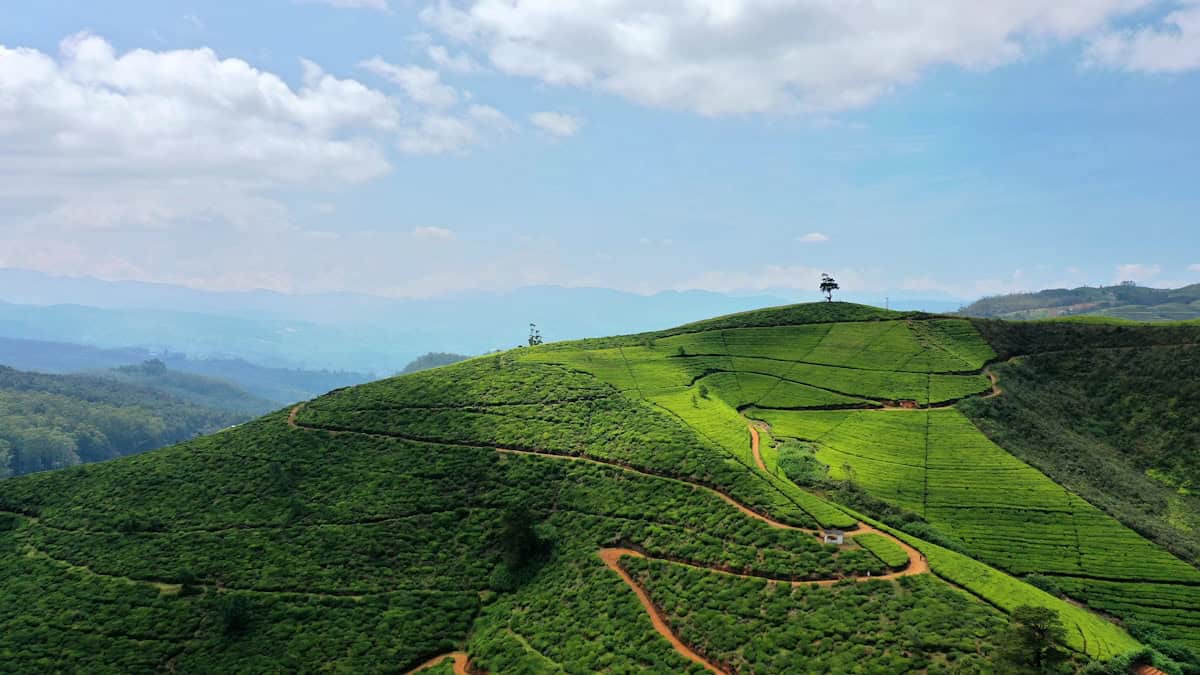
High in Sri Lanka’s central highlands sits Nuwara Eliya, often called “Little England” for its colonial architecture and cool climate. This hill station town sits 6,128 feet above sea level, creating perfect conditions for growing the tea that made Ceylon famous.
The rolling hills surrounding the town are carpeted with tea plantations that stretch as far as the eye can see. Workers in bright saris move through the bushes, carefully plucking “two leaves and a bud” that will become some of the world’s most sought-after black tea.
Visit the Pedro Tea Estate, established in 1885, where you can tour the factory and see how fresh leaves are withered, rolled, fermented, and dried using methods virtually unchanged for over a century. After your tour, enjoy a cup of fresh tea on the factory veranda overlooking the hills where it was grown.
For a truly immersive experience, stay at one of the converted tea planter’s bungalows that now operate as boutique hotels. These colonial-era homes offer a glimpse into the lives of the British planters who established the Ceylon tea industry in the 19th century.
The train journey from Kandy to Nuwara Eliya ranks among the world’s most scenic rail trips, winding through tea country with stops at small stations where you can buy fresh tea from local vendors.
3. The Cotswolds, England: Tea Rooms and Gardens

While England doesn’t grow commercial tea (though Cornwall is trying), the British perfected the art of drinking it. Nowhere captures the essence of English tea culture better than the Cotswolds, with its honey-colored stone villages and traditional tea rooms.
In tiny villages like Bourton-on-the-Water and Castle Combe, family-run tea shops serve afternoon tea just as they have for generations. Look for Huffkins in Stow-on-the-Wold or The Old Bakery in Chipping Campden for the authentic experience. Think bone china cups, three-tiered stands loaded with finger sandwiches, scones with clotted cream and jam, and perfect slices of Victoria sponge cake.
Between tea breaks, visit Highgrove Royal Gardens, where King Charles grows many of the herbs used in his Highgrove organic teas, or Hidcote Manor Garden, where you can see how English garden designers incorporated tea drinking spaces into their landscapes.
For tea history buffs, The Wilson Museum in Cheltenham houses artifacts related to the East India Company, which first brought tea to British shores in the 17th century.
Visit in June or July when the gardens are in full bloom, or September when you can cozy up by a fireplace in a stone cottage with a steaming pot of tea.
4. Hangzhou, China: Where Poets Praise Tea

Photo by David Veksler on Unsplash
Marco Polo called Hangzhou “the most beautiful city in the world,” and tea has been central to its identity for over 1,200 years. This city in eastern China is the home of Longjing (Dragon Well) tea, often considered China’s most perfect green tea.
The West Lake district offers tea experiences that blend natural beauty, history, and flavor. Visit the China National Tea Museum to learn how tea spread from China to become the world’s second most popular beverage (after water). Then head to Meijiawu Tea Village where generations of families have grown Longjing tea on the same hillsides.
What makes Hangzhou special is how tea permeates every aspect of culture. In the Tang Dynasty, poets like Bai Juyi wrote verses celebrating West Lake tea. Today, you can visit the spots where they sat sipping tea while composing poetry.
For a unique experience, take a tea-picking tour where you learn to select just the right leaves, then participate in the hand-roasting process that gives Longjing its distinctive flat shape and chestnut-like flavor.
The ideal time to visit is April, when the spring harvest produces the most prized tea of the year, or September when cooler temperatures make hiking tea mountains most pleasant.
5. Darjeeling, India: Tea with a View of the Himalayas

Photo by Boudhayan Bardhan on Unsplash
Perched on the foothills of the Himalayas, Darjeeling produces what’s often called the “champagne of teas.” The town itself sits at 6,700 feet, with tea gardens cascading down the mountainsides below.
The colonial-era Darjeeling Himalayan Railway, a UNESCO World Heritage site nicknamed the “Toy Train,” offers the most romantic way to travel through tea country. The narrow-gauge train chugs slowly through tea estates, providing perfect photo opportunities of workers tending tea bushes against a backdrop of rhododendron forests and snow-capped mountains.
Visit the Happy Valley Tea Estate, one of the oldest and highest tea gardens in Darjeeling, established in 1854. Tours show every step of production and end with a tasting that reveals why Darjeeling’s distinctive muscatel flavor commands premium prices worldwide.
For a deeper understanding of tea culture, visit the Himalayan Mountaineering Institute museum, which explains how British colonial botanists smuggled tea plants from China and established the Indian tea industry that now leads world production.
Stay at Glenburn Tea Estate, a working plantation that offers luxury accommodation in a restored planter’s house. Wake up to views of Kanchenjunga (the world’s third-highest mountain) while sipping first-flush Darjeeling on your veranda.
The prime time to visit is March through April when the spring harvest (first flush) takes place, or October through November when the autumn harvest (third flush) coincides with clear mountain views.
6. Jeju Island, South Korea: Green Tea by the Sea

Photo by Lightscape on Unsplash
This volcanic island off South Korea’s southern coast offers a tea experience unlike any other. Here, green tea fields run right down to the ocean, creating contrasts between the deep green tea plants and the blue sea beyond.
Jeju’s Osulloc Tea Museum and surrounding tea fields provide the centerpiece of the island’s tea culture. The museum’s distinctive circular building houses exhibitions on Korean tea history, while the fields outside demonstrate how tea cultivation adapts to island conditions.
What makes Jeju’s tea scene unique is how it blends traditional Korean tea culture with modern innovations. At the O’Sulloc Tea House, sample traditional green tea alongside creative concoctions like green tea ice cream, green tea chocolate, and even green tea beer.
Don’t miss the opportunity to participate in a Korean tea ceremony, where green tea is prepared with mindful attention to water temperature and serving vessels that highlight the tea’s natural properties.
The island’s volcanic soil gives Jeju-grown tea a distinctive mineral quality that sets it apart from mainland Korean teas. For the best experience, visit in May when the new tea becomes available, or September when cooler temperatures make hiking through tea fields most pleasant.
7. Assam, India: Wild Tea Country

Photo by Narayan Adhikary on Unsplash
Assam, in northeastern India, represents tea at its most untamed. This lowland region along the Brahmaputra River has hot, humid conditions perfect for growing bold, malty teas that stand up beautifully to milk.
What makes Assam unique is that tea grows here naturally. It’s one of the few places where Camellia sinensis is native rather than cultivated. Wild tea trees estimated to be 800 years old still grow in the region’s forests.
Visit during the monsoon season (June through August) to see tea at its most productive. The warm rain spurs rapid growth, and factories work around the clock processing fresh leaves. The Tocklai Tea Research Institute in Jorhat, established in 1911, offers tours explaining how modern tea science developed.
For a truly memorable experience, take a river cruise on the Brahmaputra, with stops at riverside tea estates where you can watch tea production from plucking to packing. Many cruise operators offer specialty tea-themed journeys during harvest season.
Stay at Wild Mahseer, a heritage tea bungalow converted to an eco-lodge, where you sleep surrounded by tea gardens and wake to birds calling from the nearby Nameri National Park.
8. Taiwan: Oolong Mountains and Modern Tea Culture

Taiwan might be small, but its contribution to tea culture is enormous, particularly in the development of partially oxidized oolong teas that bridge the gap between green and black varieties.
In the misty Alishan mountains, tea grows at elevations over 5,000 feet, creating complex flavors prized by connoisseurs worldwide. Visit the Pinglin Tea Museum near Taipei, the world’s largest museum dedicated to tea, then head to a traditional tea house where servers demonstrate the gongfu method of tea preparation, where multiple short infusions reveal different aspects of the tea’s character.
What makes Taiwan’s tea scene special is how it blends deep tradition with modern innovation. While mountain tea farmers still process oolong by hand using methods passed down for generations, urban tea shops like those in Taipei’s Yongkang Street area have created new drinks like bubble tea that have conquered the world.
For tea lovers seeking adventure, hike the Thousand Island Lake tea trail, where you’ll pass through tea gardens with lake views. The Maokong Gondola in Taipei offers a different kind of tea journey: a cable car ride up to a hillside famous for growing Iron Goddess of Mercy (Tieguanyin) oolong.
Visit in spring (April through May) for the best high mountain oolong, or October for fall harvests and comfortable hiking weather.
9. Wazuka, Japan: Off-the-Beaten-Path Tea Town

While many tourists flock to Uji for matcha, those in the know head to nearby Wazuka, a small town in Kyoto Prefecture where nearly 300 families have grown tea for over 800 years.
What makes Wazuka special is the landscape. Tea grows on impossibly steep hillsides, creating a patchwork of green that changes with the seasons. The town produces gyokuro (shade-grown green tea), sencha, and matcha, giving visitors a complete overview of Japanese tea varieties.
Take a guided hike through the tea fields with a local farmer who can explain how altitude, sun exposure, and soil conditions create different flavor profiles. Visit during the first harvest in May, when the entire town mobilizes for the intensive work of picking and processing the year’s most valuable crop.
For a hands-on experience, join a tea-making workshop at the Wazuka Town Tea Promotion Center, where you’ll learn to pick, steam, roll, and dry your own batch of tea to take home.
Stay at a family-run minshuku (guest house), where your hosts might include tea farmers who serve their own harvest at breakfast and dinner.
- Did you know there’s a Japanese spa where you can soak in green tea? Read all about it here!
10. Munnar, India: Where Mountains Meet Tea

Photo by gaurav kumar on Unsplash
In India’s southwestern Kerala state, the Western Ghats mountains create ideal conditions for growing tea with character. Munnar sits at the heart of this region, surrounded by estates established by Scottish planters in the late 1800s.
The KDHP Tea Museum offers a window into colonial-era tea production, with machinery dating back to the 1900s. Then head into the hills, where women in colorful saris hand-pick tea leaves against a backdrop of mountain peaks and cardamom forests.
What sets Munnar apart is its biodiversity. Tea grows alongside spice plantations and shola forests filled with rare orchids and birds. The region produces distinctive high-grown teas with bright, clean flavors that reflect the mountain terroir.
For tea enthusiasts seeking something different, visit the Lockhart Tea Factory, where you can see the CTC (crush-tear-curl) method that produces teas specifically designed for brewing with milk and spices in traditional Indian chai.
Stay at a converted planter’s bungalow for the full experience, complete with evening tea service on the veranda as mist rolls in over the mountains. The best time to visit is between September and November when the monsoon rains have passed but the landscape remains lush and green.
11. Yunnan, China: The Ancient Tea Horse Road

Photo by Noppon Meenuch on Unsplash
The southwestern Chinese province of Yunnan is where tea cultivation began thousands of years ago. Here you’ll find the world’s oldest tea trees, some over 1,800 years old, still producing leaves in the forests around Xishuangbanna.
This region is the birthplace of pu-erh tea, the fermented variety that improves with age like fine wine. Visit the Yunnan Tea Culture Museum in Kunming to learn how tea from this region traveled the Ancient Tea Horse Road to Tibet and beyond, shaping Asian history and culture.
The most memorable experience in Yunnan is visiting the villages of the Bulang, Dai, and Aini ethnic minorities, who have cultivated tea for countless generations. In these communities, tea isn’t just a crop. It’s central to religious practices, medicine, cuisine, and daily social life.
Stay in the town of Menghai, the center of pu-erh production, where you can visit factories that still use traditional methods to compress tea into cakes for aging. Don’t miss the chance to participate in a tea tasting where you’ll sample pu-erh of different ages, from new “raw” tea to vintages aged for decades.
The best time to visit is March through May when tea picking is at its height and mountain villages celebrate spring tea festivals.
12. Charleston, South Carolina: America’s Tea Plantation

Photo by Leo Heisenberg on Unsplash
Few Americans realize the US has a commercial tea plantation, but Charleston Tea Garden on Wadmalaw Island has grown American Classic Tea since the 1980s. This 127-acre farm is the only large-scale tea operation in America.
Take the trolley tour through neat rows of tea bushes, then visit the factory where massive windows let you watch the entire production process from withering to packaging. What makes this tea destination special is how accessible it makes tea production. Unlike farms in Asia, visitors can get up close to every aspect of cultivation and processing.
The gift shop offers the chance to taste tea grown on American soil, with varieties ranging from traditional black tea to southern sweet tea. Visit during the First Flush Festival in May to celebrate the year’s first harvest with music, food, and unlimited tea.
Combine your tea garden visit with Charleston’s historic downtown, where you can enjoy southern tea culture at traditional tea rooms like Charleston Place, which serves an afternoon tea blending English tradition with Lowcountry flavors.
13. Kurseong, India: Traditional Teas

Photo by Boudhayan Bardhan on Unsplash
Between Darjeeling and the plains below lies Kurseong, home to some of India’s most storied tea estates. Margaret’s Hope, named after the daughter of an early plantation owner, produces teas with a distinctive muscatel flavor that wins awards worldwide.
What makes this estate special is its commitment to traditional processing methods. While many Darjeeling gardens have modernized, Margaret’s Hope still uses some equipment dating back to the 1930s, creating teas with character that modern machines can’t replicate.
Take a guided tour through the factory to see orthodox tea processing from start to finish, then walk the hillside gardens where tea grows alongside orange trees and cinchona. The estate’s colonial bungalow, now operating as a guest house, offers accommodation with sweeping views of the Himalayas.
The most magical time to visit is just after dawn when mist rises from the valleys below and the first light illuminates the snow-capped peaks in the distance, all visible while enjoying a cup of tea from bushes just outside your window.
14. Ooty, India: The Queen of Hill Stations

Photo by karthegan Padmanaban on Unsplash
The Nilgiri Hills of southern India produce distinctive blue-hued leaves that create bright, fragrant teas unlike any others in the world. Ooty (Udhagamandalam), established as a British hill station in the early 19th century, sits at the heart of this tea-growing region.
Visit the Doddabetta Tea Factory near the highest peak in the Nilgiris, where you can watch tea processing and sample the finished product at different stages of oxidation. The Nilgiri Tea Museum explains how the unique “frosting” that occurs at high altitudes gives local teas their characteristic wintergreen notes.
What makes Ooty special is the diversity of its tea culture. Here, British colonial traditions blend with local Tamil customs to create a unique approach to tea appreciation. Try local chai spiced with cardamom grown in the same hills as the tea, or visit a traditional Tamil home where tea might be served with savory snacks like murukku and vada.
Take the Nilgiri Mountain Railway, a UNESCO World Heritage site, for a scenic journey through tea country aboard a steam-powered rack railway built in 1908. The best time to visit is between October and June, avoiding the heavy monsoon rains of summer.
15. Mauritius: The Bois Cheri Tea Route

Photo by Rumman Amin on Unsplash
This island nation in the Indian Ocean might not be the first place you think of for tea tourism, but Mauritius has grown tea since French colonists introduced it in the 1760s. Today, the Bois Cheri Tea Estate forms part of the island’s “tea route,” offering a unique perspective on how tea adapted to plantation life in the tropics.
Tour the factory and museum to learn how vanilla-flavored black teas became the island’s specialty, then enjoy tea and cake at the estate restaurant overlooking the tea fields and the ocean beyond. What makes this destination special is the setting. Few places allow you to see tea growing with ocean views.
Combine your visit with stops at the other points on the tea route: Domaine des Aubineaux, a colonial mansion showing how tea planters lived, and Saint Aubin, where you can see how tea cultivation worked alongside sugar and rum production in the island’s complex colonial economy.
For adventurous tea lovers, the island’s wild south coast offers the chance to seek out locally grown medicinal teas made from endemic plants found nowhere else on Earth.
The best time to visit is May through October, during the dry winter season when temperatures are pleasant for exploring tea gardens and hiking the island’s dramatic mountains.
Whether you’re drawn to the ancient tea forests of Yunnan, the manicured gardens of Darjeeling, or the cozy tea rooms of the Cotswolds, a tea-focused vacation offers a delicious way to study history, culture, and flavor. Pack an extra suitcase for all the tea you’ll bring home. These destinations guarantee you’ll find varieties you never knew existed, each with a story as rich as its flavor.
About the Author
Originally from Indiana, Heather believes every destination has a story worth telling and a reason to visit. With a deep love of adventure, history, and psychology, she shares travel trivia, tips, and inspiration to encourage you to explore the world with curiosity and optimism. Read her other articles on Frayed Passport here.Featured image by 五玄土 ORIENTO on Unsplash
FOLLOW US ON INSTAGRAM


Information published on this website and across our networks can change over time. Stories and recommendations reflect the subjective opinions of our writers. You should consult multiple sources to ensure you have the most current, safe, and correct details for your own research and plans.